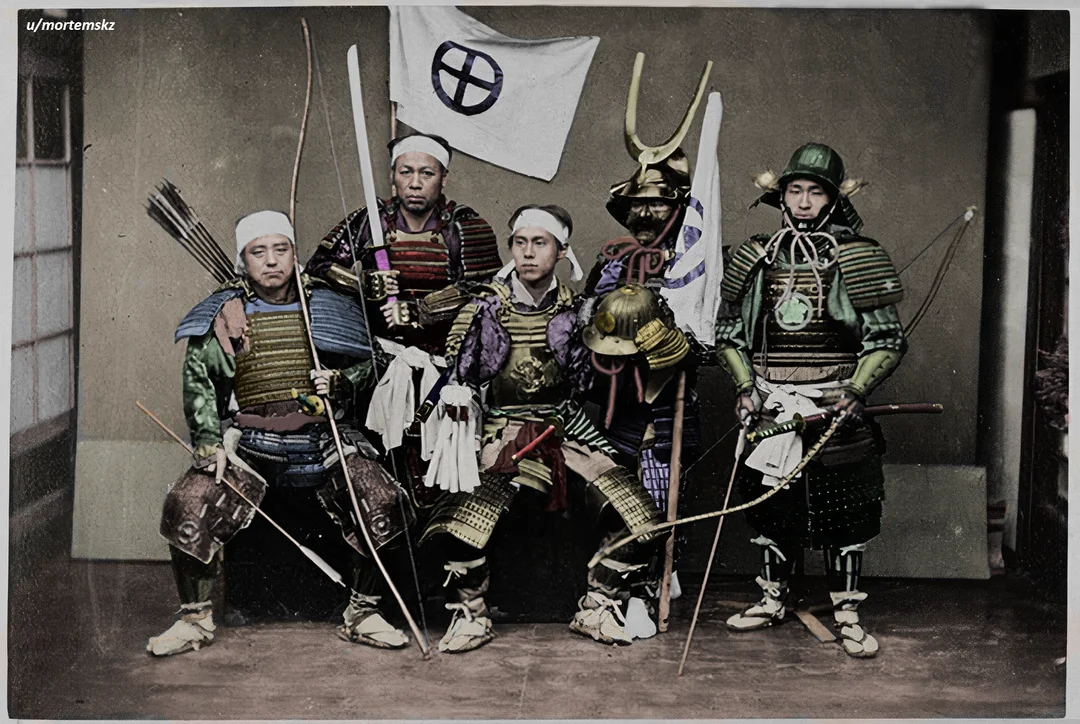
The Satsuma Rebellion of 1877 was a final stand by the samurai class against the sweeping reforms of the Meiji government. The Meiji Restoration had ushered in modernization, military conscription, and the abolition of the samurai, dismantling the very social order that had defined Japan for centuries. Many samurai saw these reforms as a betrayal of their status, their traditions, and their very way of life.
Yet, despite their resistance, Japan as a whole was focused on a singular goal: preventing colonization by foreign powers. The country’s rapid modernization was not just about modernization and progress. In the face of foreign incursions and political meddling in the region, it was about protecting their sovereignty and ensuring their very survival.
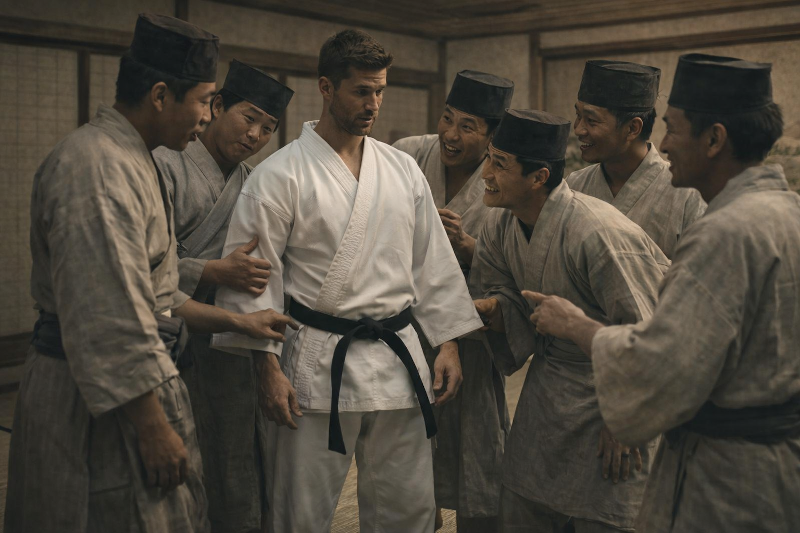
The film The Last Samurai captures this tension through the arc of fictional character Nathan Algren (Tom Cruise), a tortured military Captain drawn into Japan’s internal struggle. In one pivotal scene, he clashes with Omura, a self-serving Japanese official. Omura, seeking to bolster Japan’s capitalist economy, sought to marginalize the samurai, diminishing their power and eroding their influence in their modernizing world. Algren, repulsed by Omura, would later find himself siding with the samurai and identifying with their ideals.
What happened in the Satsuma Rebellion?
The historical reality was brutal. The samurai’s final stand culminated in The Battle of Shiroyama, where Saigō Takamori, once a leader of the Meiji Restoration himself, chose to die for principle rather than accept the new imperial order. Outmaneuvered and outnumbered, his forces fought until their last breath. Saigō, wounded, committed seppuku on the battlefield, his death marking the end of an era.
“… the Samurai had been swept aside by the very nation they wished to protect.”
—Colin Wee, Excerpt from “The Lost Scrolls of Ryūkyū” (Unpublished Manuscript, 2025)
Many misinterpret The Last Samurai. The film is not about a foreigner becoming Japan’s last warrior. It was a man who chose to stand alongside the samurai, honoring their code, embracing their discipline, and celebrating their life’s purpose.
By the time the Meiji era ended in 1912, Japan had fully transitioned into a modern imperial power. The samurai were gone. The country then rose as a force to be reckoned with in the global arena. But for its annexed territories, such as Okinawa, modernization brought no relief.
My new book project, a historical fiction novel The Lost Scrolls of Ryūkyū follows a small group of Ryukyuan bureaucrats from this era. Soon after the samurai were vanquished, their country was annexed by Japan, Ryukyuan subjects were left distressed, and their hopes for autonomy and self-governance grew ever dimmer.
The Fallout from the Meiji Restoration
Struggling with destitution and cultural whitewashing, my protagonists envisioned the establishment of a new system of Karate, one that could survive the political upheaval around them and improve their cultural security.
As Japan entered the Great War, and as rising militarism took hold of the nation, these men were forced to face a dilemma not unlike the Samurai before them. They had to ask themselves whether they were building a legacy to protect their people, or were they creating a system that would be absorbed into an imperial machine they never intended to serve?
Development of Karate
These questions didn’t end with my protagonist’s proposal to the Japanese Ministries of War and Education. They carried forward into the next generation, following up with the choices he made, the compromises he accepted, and the legacy he tried to protect as Japan moved deeper into an era of uncertainty.
How did Okinawan karate pioneers navigate the years that followed? What happened as karate entered Japanese universities? And what became of the men who believed they were building something that could outlast the storms around them?
If you’re curious to see how this story unfolds: the politics, the philosophy, and the human cost, come spend some time with me on this site or sign up for the occassional newsletter. I’ll be exploring each of these points in this blog.
And if you want to experience the full story as a living, breathing narrative, you can step straight into the world of The Lost Scrolls of Ryukyu.
If you’re interested to learn more about Okinawa, perhaps you’d also care to explore the Occupied Okinawa: A Documentary Film by Robert Kajiwara from Peace for Okinawa Coalition. If you’re interested in Jigen-ryu, the sword style used by the Satsuma, and that which Matsumura gained a Menkyo Kaiden in despite it being a gokui or forbidden secret style, see the following video.
Bio: Colin Wee is a Singaporean author, martial‑arts instructor, and cultural historian whose four‑decade practice spans Asia, Australia, and the United States. Known for his analytical approach and deep tactical insight, Colin blends historical research with lived experience to illuminate the human stories behind martial traditions. He is the founder of Joong Do Kwan in Perth, Western Australia, and serves as Secretary of the Australasian Martial Arts Hall of Fame (see About the Author).