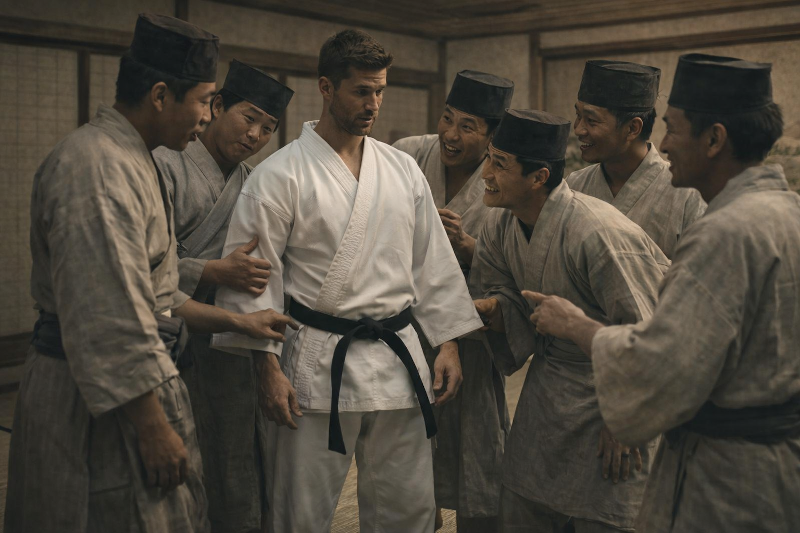

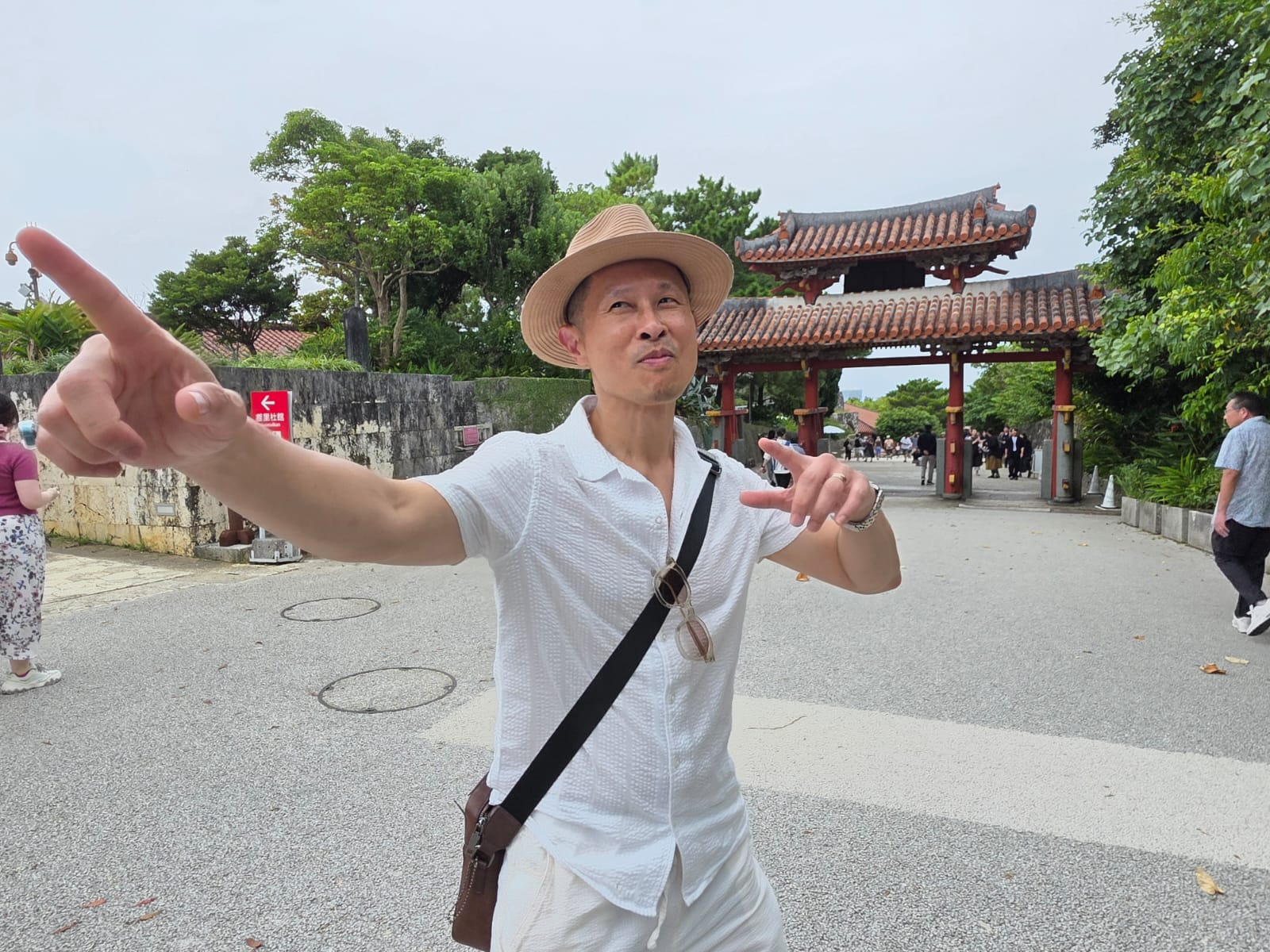
In October 2025, I travelled to Okinawa as part of my ongoing research for a historical fiction manuscript that is set in 19th‑century Ryukyu. This new book project follows a group of bureaucrats navigating the political and cultural pressures of the Japanese annexation, and I couldn’t write about that world responsibly without spending time there myself. Even though the work is historical fiction, I wanted to avoid grossly misrepresenting the people, the culture, or the context I was drawing from.
During the trip, I had the opportunity to teach at a Master Instructor Seminar held at Midorigaoka Park in Naha coordinated with Okinawa Karate Day. My session focused on Jion kata bunkai, using applications and tactical logic that tie into themes from the manuscript. The work blended structural mechanics, hard‑ and soft‑style concepts, and principle‑based interpretation. It was a good chance to share ideas in front of expert practitioners who enjoy the roots of these traditions as much as I do.
Finding where Anko Itosu and Matsumura Sokon are buried
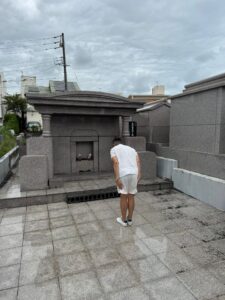
One of the moments that has stayed with me wasn’t from the seminar itself, but from a quiet visit I made with our small group to the graves of Matsumura Sōkon and Itosu Ankō (Visit Matsumura Sokon’s grave 26°13’28.7″N 127°42’20.4″E Google Map: 6PF4+V7 Naha and Itosu Anko’s grave – 84m SE of Matsumura’s grave, at Makabi. Directions: take monorail to ‘13 Naha City Hospital’, walk 700m Southwest of Station. Address: 3-10 Makabi, Naha City, Okinawa 902-0068, Japan.)
Standing there and speaking about their lives and contributions felt significant in a way that’s hard to articulate. It wasn’t about romanticising the past; it was simply to acknowledge the people whose work shaped so much of what we practise today. That experience grounded the rest of the trip for me.
Being in Okinawa helped me understand the environment, rhythms, and cultural texture I’m trying to represent in the manuscript. It also reminded me that martial arts is always connected to real people, real places, and real histories. That’s something I want to carry forward in both my writing and my teaching.
As I prepare for the American Karate and Taekwondo Organization’s 50th anniversary event next March 2026, I’m looking at how to integrate insights from this research, the Jion applications I’ve been finessing, and material that aligns with AKATO’s lineage. My aim is the same as it has always been: to contribute in a way that allows us to understand and celebrate the traditions we’ve inherited.
I’d love to hear what you think. If you’re on Goodreads, drop a question there. Or if you’re an Okinawan business or organisation that identifies with my work 琉球武術支援, I would love to connect with you. What would you like to see in a story that supports the lived experiences of martial art pioneers? What would you expect of these historical characters?
—Colin Wee
Related: How Jion Reshaped My Training and Led Me to Anko Itosu, and Martial Arts Tour to Okinawa
Bio: Colin Wee is a Singaporean author, martial‑arts instructor, and cultural historian whose four‑decade practice spans Asia, Australia, and the United States. Known for his analytical approach and deep tactical insight, Colin blends historical research with lived experience to illuminate the human stories behind martial traditions. He is the founder of Joong Do Kwan in Perth, Western Australia, and serves as Secretary of the Australasian Martial Arts Hall of Fame (see About the Author).