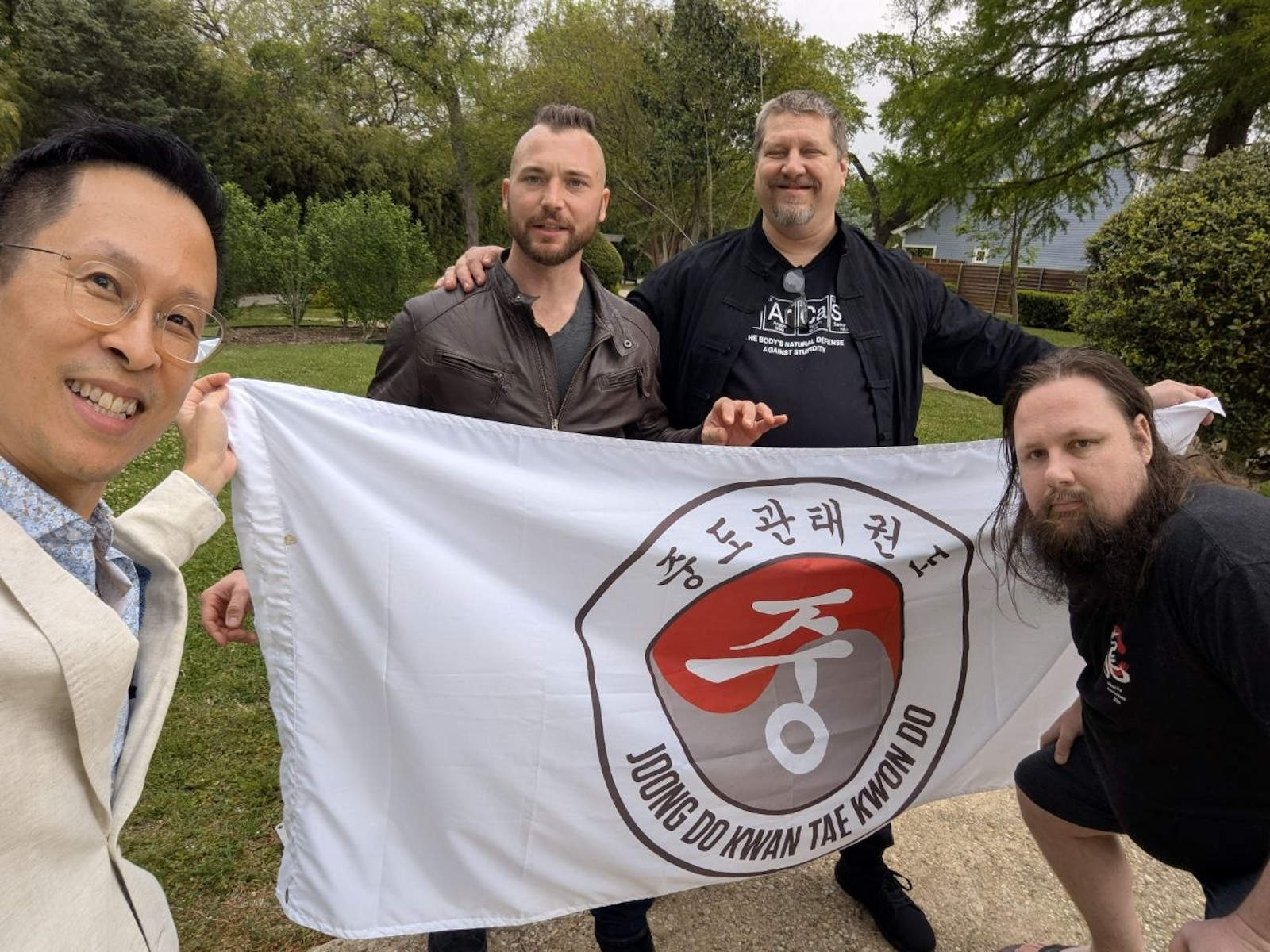

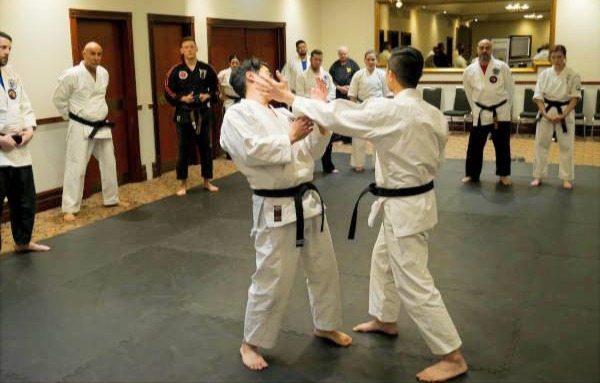
This clip was filmed during my official induction into the Australasian Martial Arts Hall of Fame, an event delayed from 2020 until borders were reopened. Western Australia had been fortunate during that period; while the world was locked in, life continued with relative freedom, and I had the luxury of continuing my preparations for the demonstration and seminar portion of the AMAHOF weekend.
Many who watched my demo later shared with me they were expecting aerial kicks and acrobatics, the spectacle people associate with Taekwondo. What they saw instead was something far more traditional, and far more reflective of the work my school had been immersed in for years.
What do you expect from a martial arts seminar?
My usual explanation is I wanted to share traditional applications, or perhaps I was demonstrating whatever my school happened to be practising at the time. The truth was that I’d been deep in the rabbit hole for many years leading up to this point. In the late 2010s I pulled my school into an intense, single‑kata focus. When COVID shut the world down, and when we realised how much insight that deep dive had produced, we finally gave in to the idea that had been circling around for years: this needs to become a book.
Motivated by our phenomenal progress, I switched tracks and plunged into the next kata Jion. Supporting me was the last remaining black belt at JDK. While I could say COVID decimated my school, the reality was that training one kata day‑in, day‑out was not for everyone.
How do you ‘find’ bunkai?
Our process is demanding. When we explore a kata or a combative system, we deconstruct every facet of it. We break it apart, test it against a non‑compliant opponent, rebuild it, and repeat. By the time this video was filmed, we had spent nearly three intense years taking Jion on a wild ride. And then we reached an event horizon: when we took stock of Jion, we were shocked to find at a high level it was nothing like Bassai. For those who don’t already know, Bassai was the kata that formed the backbone of my first book, Breaking Through: The Secrets of Bassai Dai Kata.
How do you start writing a Martial Arts Book?
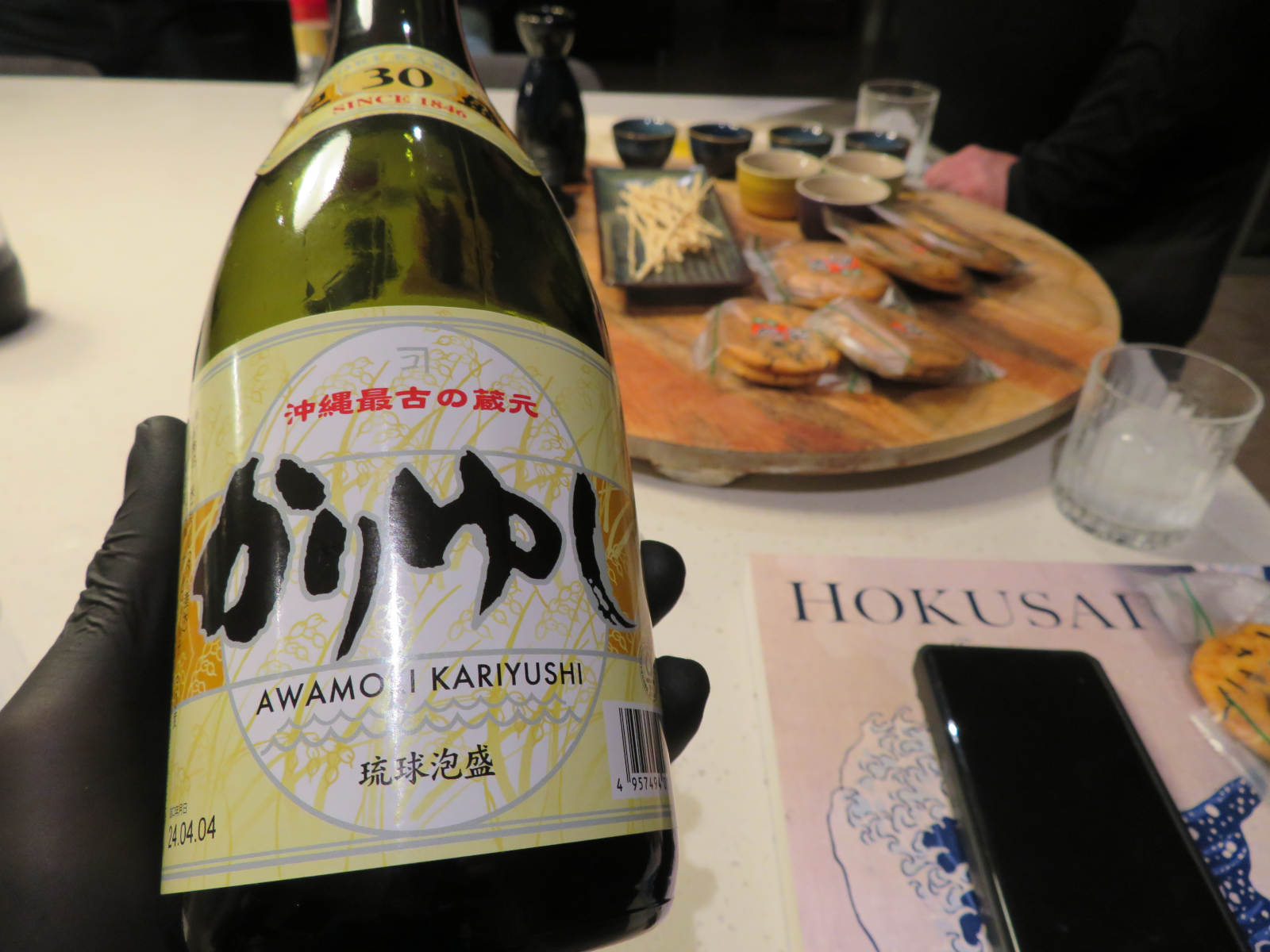
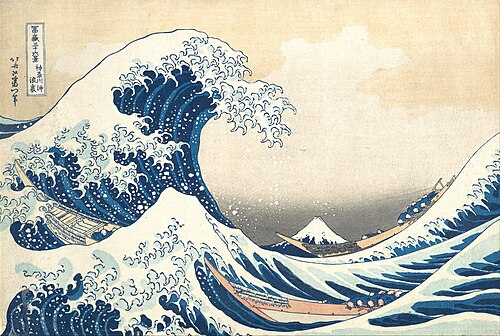
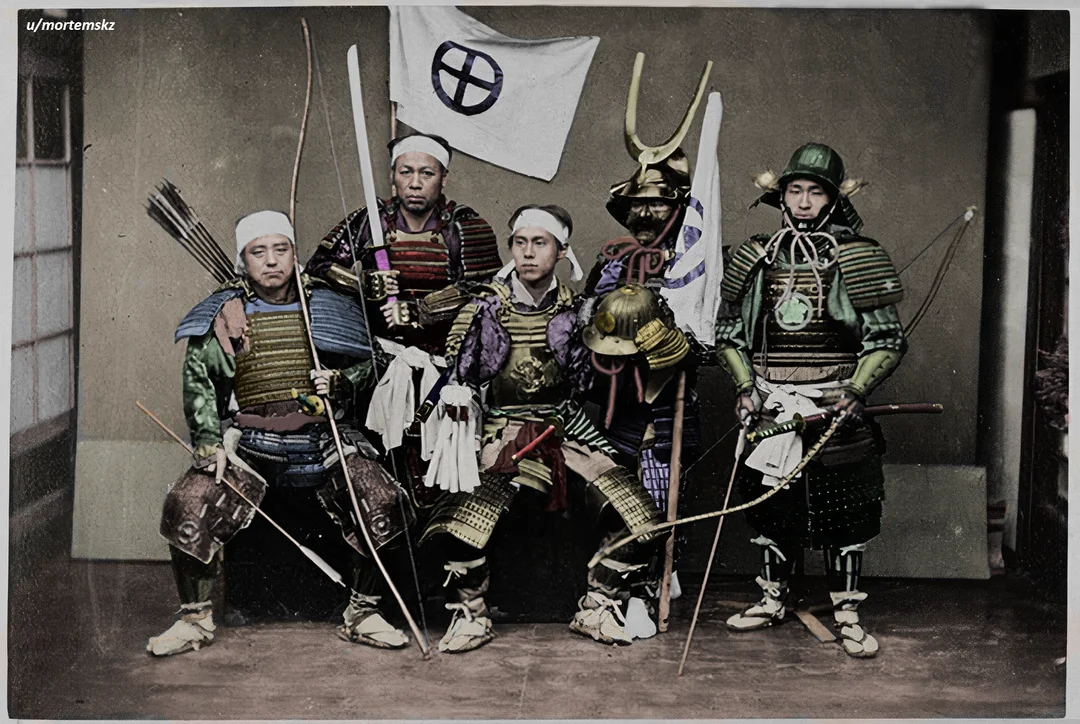
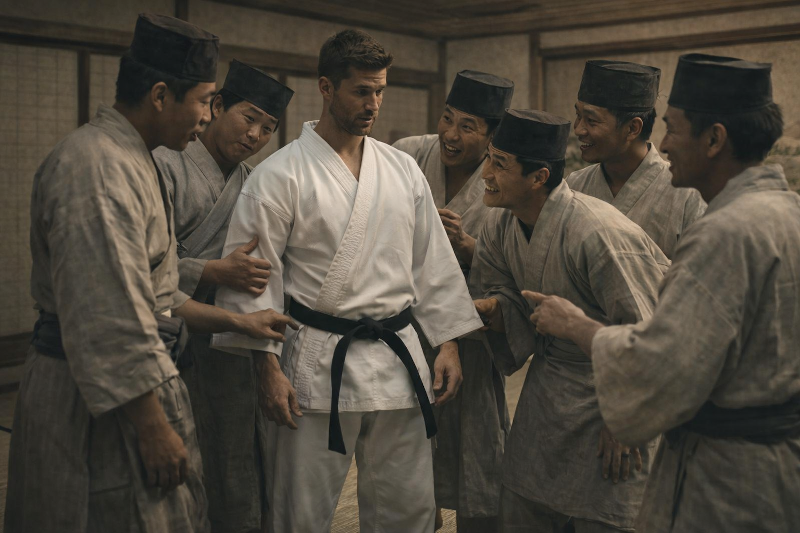
That realisation forced us into frenzied research. Pulling on Jion’s threads was what led to unexpected discoveries about the pioneers of our martial art. One insight led to another, and before long an entire historical tapestry fell into view. It was then I knew I owed it to the world to begin work on Anko: The Lost Scrolls of Ryukyu.
I was apprehensive not quite believing I had the chops to adequately deliver the story. It was an epic beginning with the Japanese subjugation of Ryukyu in the 19th century, and culminating with beleaguered ex-bureaucrats attempting to preserve their culture by developing karate as a training program for the century ahead.
Acquiring Soft Power in Martial Arts
If you watch the demonstration, you can see my search for precursor know-how had influenced my own practice. My abilities were clearly shifting, though it wasn’t a deliberate move on my part to emulate the Ryukyuans. My research had led me to postulate their goals, and that required the retrofit of hard‑style and soft‑style skills back into kata and application work.
From 0:02–0:08, you can see me working through an application to bypass the tangle of arms – while my partner was deliberately offering active resistance. I remember noticing the difficulty as I narrated; eventually I had to trust my senses to take over, read his movement, bypass the resistance and displace his structure for the takedown.
What this is is me dealing directly with my opponent. I’m not “demonstrating” Jion nor trying to prove how closely my skills resemble its sequences. Yes, I’ve worked with Jion’s technical sequences. I’ve also varied them endlessly. And when the adversary opposes them, I naturally circumvent and bypass the obstruction instinctively. The read of the situation and response to the unscripted, dynamic attack come easily – because that is what the training helps you do. Jion informs the initiative, it does not limit it.
Likewise, I could have written another non-fiction book laying out a sequence of historical facts. I could have stuck rigidly to historical cannon, the way many insist application bunkai must resemble the kata. But would that do justice to the story though? Or is it more meaningful to feel their journey, like the way I’m now pushing past hard-style training into soft-style tactics.
That, I believe, is the truth martial artists actually want.
Related: Martial Arts Tour to Okinawa
Bio: Colin Wee is a Singaporean author, martial‑arts instructor, and cultural historian whose four‑decade practice spans Asia, Australia, and the United States. Known for his analytical approach and deep tactical insight, Colin blends historical research with lived experience to illuminate the human stories behind martial traditions. He is the founder of Joong Do Kwan in Perth, Western Australia, and serves as Secretary of the Australasian Martial Arts Hall of Fame (see About the Author).