
Soft‑Style Power and Ryukyu’s Hidden Mechanics: A Behind‑the‑Scenes Look at My Dallas Seminar

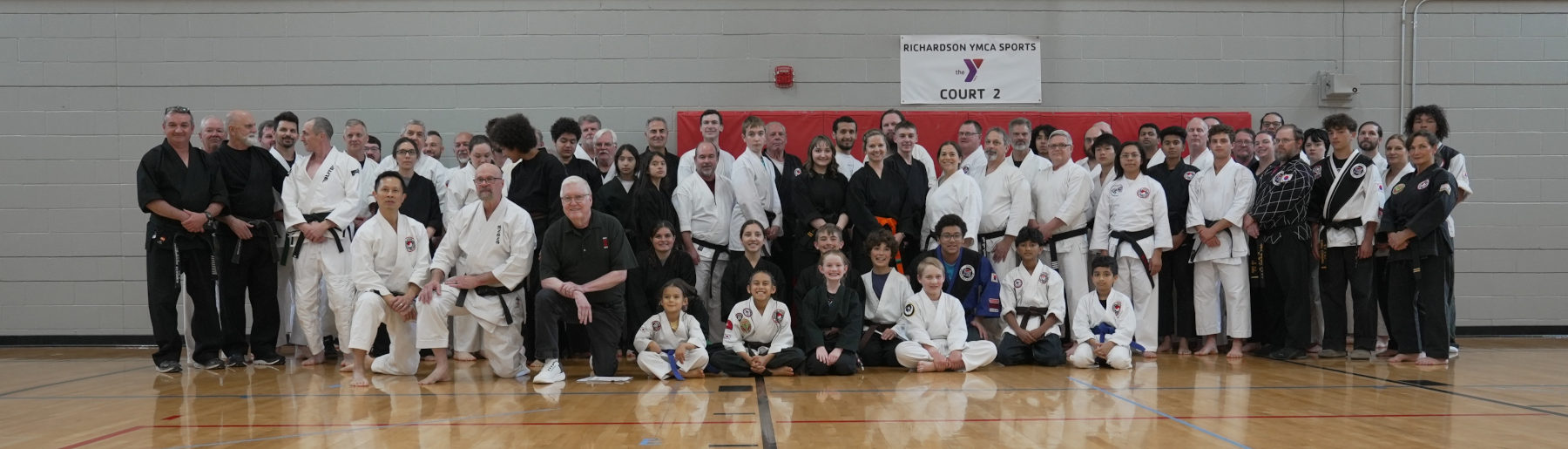
AKATO Dallas 2026 Group Picture with Seminar Leaders and GM Keith Yates

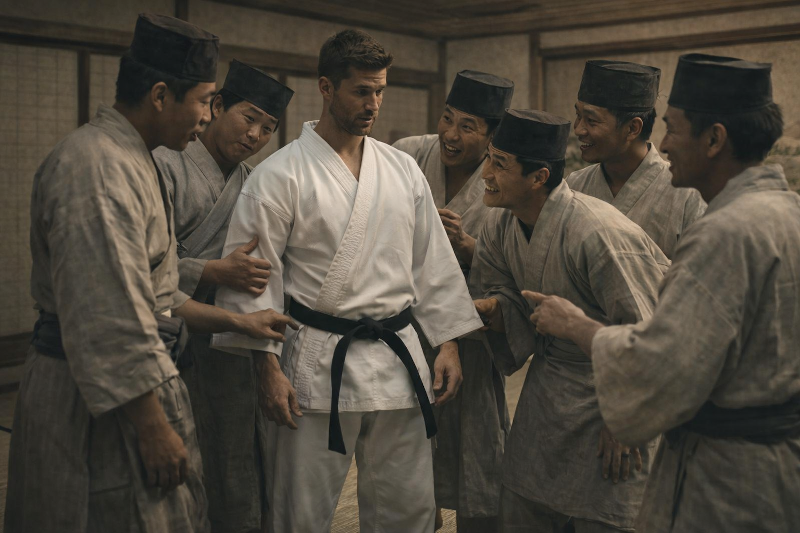
During AKATO’s 50th Anniversary weekend in Dallas (March 2026), I taught a session that allowed me to share the research shaping Anko: The Lost Scrolls of Ryukyu. Much of my work over the past few years has involved reconstructing how Ryukyuan retainers combined hard‑style initiative with soft‑style internal mechanics, a blend that’s rarely seen in modern training.

The demonstration opened with an application drawn from Nam Seo Hyung: closing distance, prompting reaction, and using circular movement to create openings along the centreline. From there, the sequence branched into two close‑quarter variations inspired by Jion, each exploring a different way to manage the opponent’s structure: either through limb control or through neck manipulation, and balance disruption.

What is the difference between hard-style v soft-style martial arts?

For many practitioners in the room, this was unfamiliar territory. Hard‑style systems often emphasise direct power, while soft‑style methods rely on timing, whole‑body coordination, and subtle changes in pressure. Bringing these ideas together and showing how Ryukyuan retainers may have used them in real conflict, created some dramatic moments. With very little visible movement, my training partner’s balance was broken and his momentum carried him across the floor. In another variation, a circular pulse around the neck opened the way for a controlled takedown and a simulated weapons check.

What I hoped to share wasn’t a highlight reel of ‘lethal’ techniques, but a window into the research process: how historical context, body mechanics, and cross‑style exploration can reshape our understanding of a fighting system. Ryukyu’s retainers were small in stature, but they relied on efficiency, teamwork, and a fusion of ideas to maintain advantage in asymmetrical situations. That blend continues to fascinate me, and it’s a core part of the world behind Anko: The Lost Scrolls of Ryukyu.

If you’d like to see a portion of the Dallas session, the video is available at:

👉 https://youtu.be/HvdC0uz2tM4

Do you practice like this? Would love to see what you’re doing with your system. If you’re on Goodreads, drop a question there.

Related: Exploring Past Your Comfort Zone: Colin’s Martial Arts Seminar in Schenectady, NY 2024

Bio: Colin Wee is a Singaporean author, martial‑arts instructor, and cultural historian whose four‑decade practice spans Asia, Australia, and the United States. Known for his analytical approach and deep tactical insight, Colin blends historical research with lived experience to illuminate the human stories behind martial traditions. He is the founder of Joong Do Kwan in Perth, Western Australia, and serves as Secretary of the Australasian Martial Arts Hall of Fame (see About the Author).
Exploring Past Your Comfort Zone: Colin’s Martial Arts Seminar in Schenectady, NY 2024

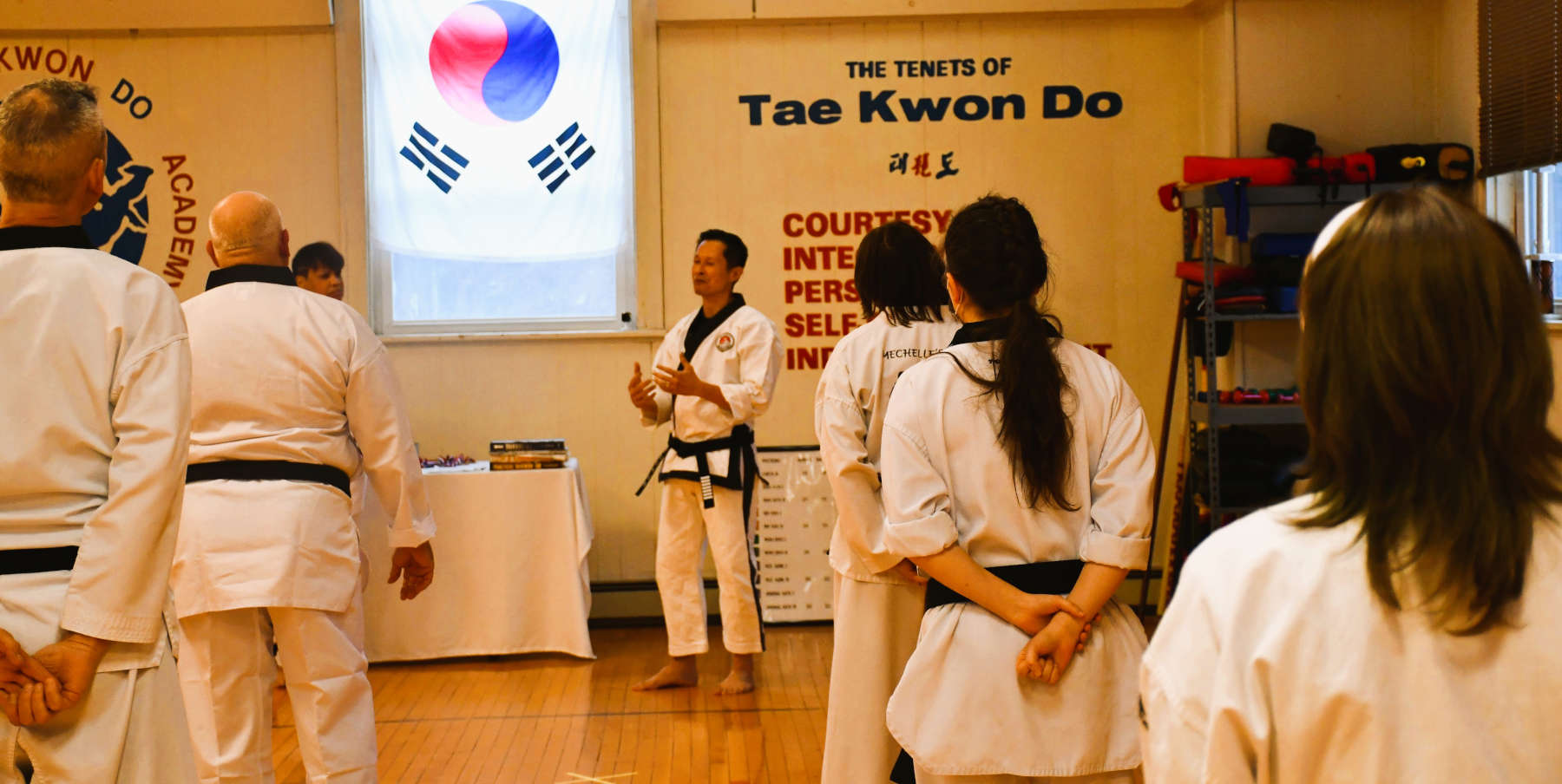
Schenectady 2024 Seminar by Colin Wee

A trip to JDK USA Schenectady, New York, for a martial arts seminar in January 2024 pushed me outside my comfort zone. It followed a successful seminar and book launch in Dallas the previous year.

New York felt daunting. It was uncharted territory, a stark contrast to the familiarity of Dallas. Yet, it presented an excellent opportunity to strengthen my working relationship with host Master Will Just

Will had connected with me five years prior, and was my demonstration partner in Dallas. He was captivated by training methodology, and the emphasis on extracting practical applications from traditional forms.

When my wife’s work led to a short stint in New York, I reached out and encouraged Will to organize a seminar. The timing wasn’t ideal: as the holidays and harsh winter would decrease attendance and ticket sales. Undeterred by the challenges, Will, fueled by his experience in Dallas, mobilized his network, visited schools he wasn’t connected with, and promoted the event feverishly.

Getting to my martial arts seminar

Traveling from Australia was an adventure itself, and after a week trampling around Manhattan with my wife, I took the three hour train ride up to Schenectady. It was good to see two familiar faces : Will Just, and long time JDK Associate Jeff Palm. Taekwondo Times Editor Jack Berry, whom I had connected with just the week earlier had also traveled up from Manhattan with me.

The seminar focused on unlocking the hidden potential of traditional forms and exploring their practical applications. We emphasized the importance of anticipation, sensitivity to the opponent, and circumventing the opposition. While the material took participants to the edge of their comfort zone, it was good seeing enthusiastic smiles, and the willingness to give things a go.

A highlight was witnessing a visiting Grandmaster seamlessly blend her long-time police experience with the seminar material, demonstrating the inter-relatedness of tactical skill.

Expanding my martial arts network

This journey to Schenectady was far from being just another martial arts seminar. It reaffirmed the value of venturing outside comfort zones, embracing the unexpected, and fostering meaningful connections. Directly inspired by the visit, Will Just moved to establish a new branch of JDK to develop his own martial arts training group.

This is a reminder that growth often lies beyond familiar territory, and that stepping outside our comfort zones can open doors to new possibilities and enrich our lives in profound ways.

Related: Soft-Style Power and Ryukyu’s Hidden Mechanics: A Behind-the-Scenes Look at My Dallas Seminar

Bio: Colin Wee is a Singaporean author, martial‑arts instructor, and cultural historian whose four‑decade practice spans Asia, Australia, and the United States. Known for his analytical approach and deep tactical insight, Colin blends historical research with lived experience to illuminate the human stories behind martial traditions. He is the founder of Joong Do Kwan in Perth, Western Australia, and serves as Secretary of the Australasian Martial Arts Hall of Fame (see About the Author).
Okinawa Reflections

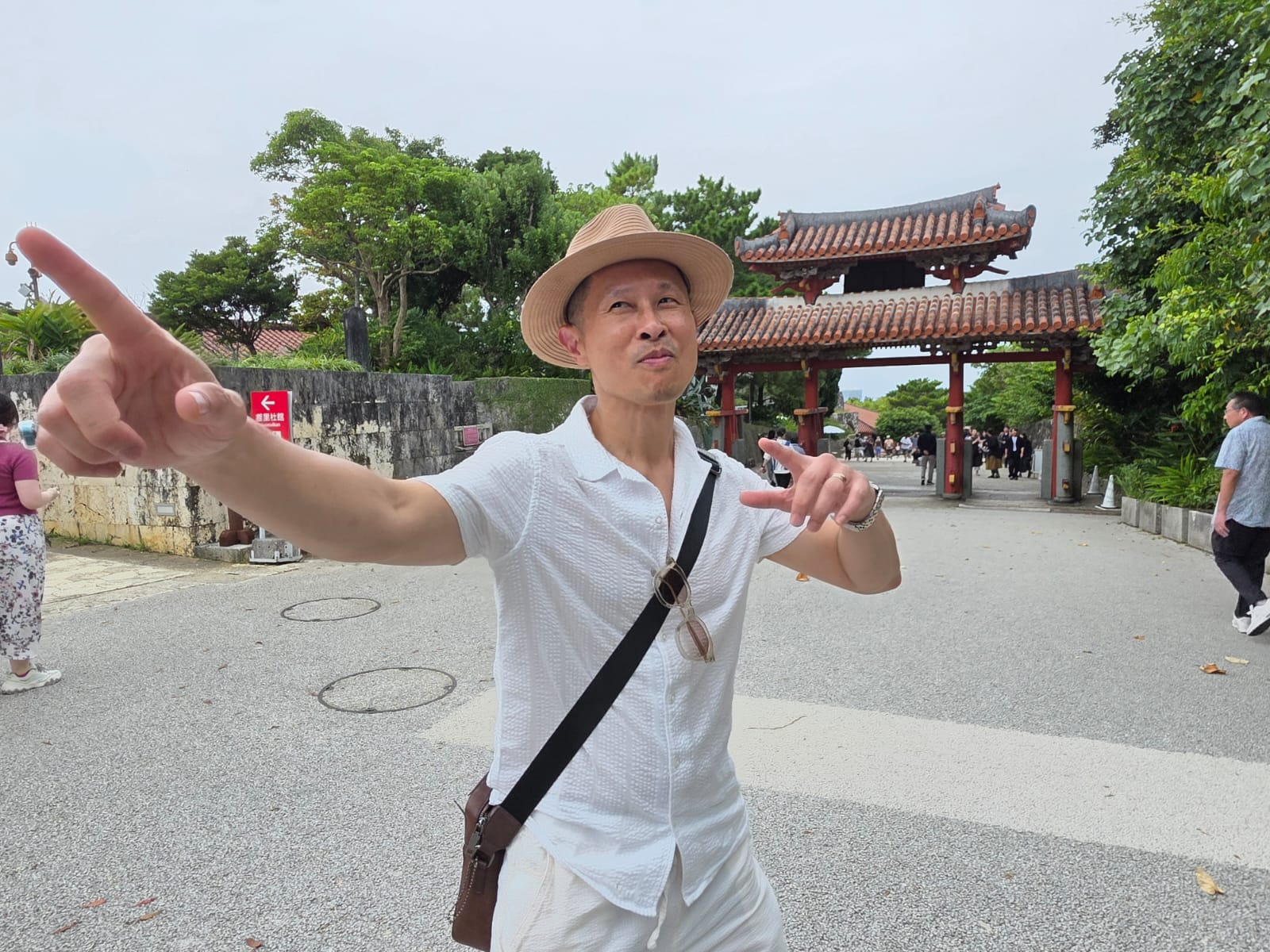
Colin Wee tours Shuri Castle. Standing in front of Shureimon for the first time.

In October 2025, I travelled to Okinawa as part of my ongoing research for a historical fiction manuscript that is set in 19th‑century Ryukyu. This new book project follows a group of bureaucrats navigating the political and cultural pressures of the Japanese annexation, and I couldn’t write about that world responsibly without spending time there myself. Even though the work is historical fiction, I wanted to avoid grossly misrepresenting the people, the culture, or the context I was drawing from.

During the trip, I had the opportunity to teach at a Master Instructor Seminar held at Midorigaoka Park in Naha coordinated with Okinawa Karate Day. My session focused on Jion kata bunkai, using applications and tactical logic that tie into themes from the manuscript. The work blended structural mechanics, hard‑ and soft‑style concepts, and principle‑based interpretation. It was a good chance to share ideas in front of expert practitioners who enjoy the roots of these traditions as much as I do.

Author Colin Wee Martial Arts Cultural Exchange Seminar at Midorigaoka Park

Finding where Anko Itosu and Matsumura Sokon are buried

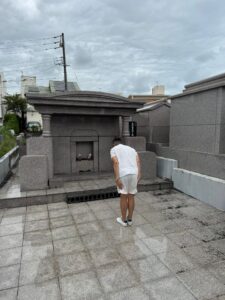
One of the moments that has stayed with me wasn’t from the seminar itself, but from a quiet visit I made with our small group to the graves of Matsumura Sōkon and Itosu Ankō (Visit Matsumura Sokon’s grave 26°13’28.7″N 127°42’20.4″E Google Map: 6PF4+V7 Naha and Itosu Anko’s grave – 84m SE of Matsumura’s grave, at Makabi. Directions: take monorail to ‘13 Naha City Hospital’, walk 700m Southwest of Station. Address: 3-10 Makabi, Naha City, Okinawa 902-0068, Japan.)

Standing there and speaking about their lives and contributions felt significant in a way that’s hard to articulate. It wasn’t about romanticising the past; it was simply to acknowledge the people whose work shaped so much of what we practise today. That experience grounded the rest of the trip for me.

Being in Okinawa helped me understand the environment, rhythms, and cultural texture I’m trying to represent in the manuscript. It also reminded me that martial arts is always connected to real people, real places, and real histories. That’s something I want to carry forward in both my writing and my teaching.

Author Colin Wee visiting with his protagonist Anko Itosu, Makabi Cemetary, Okinawa Oct 2025

As I prepare for the American Karate and Taekwondo Organization’s 50th anniversary event next March 2026, I’m looking at how to integrate insights from this research, the Jion applications I’ve been finessing, and material that aligns with AKATO’s lineage. My aim is the same as it has always been: to contribute in a way that allows us to understand and celebrate the traditions we’ve inherited.

I’d love to hear what you think. If you’re on Goodreads, drop a question there. Or if you’re an Okinawan business or organisation that identifies with my work 琉球武術支援, I would love to connect with you. What would you like to see in a story that supports the lived experiences of martial art pioneers? What would you expect of these historical characters?

—Colin Wee

Related: How Jion Reshaped My Training and Led Me to Anko Itosu, and Martial Arts Tour to Okinawa

Bio: Colin Wee is a Singaporean author, martial‑arts instructor, and cultural historian whose four‑decade practice spans Asia, Australia, and the United States. Known for his analytical approach and deep tactical insight, Colin blends historical research with lived experience to illuminate the human stories behind martial traditions. He is the founder of Joong Do Kwan in Perth, Western Australia, and serves as Secretary of the Australasian Martial Arts Hall of Fame (see About the Author).