
Evolving the Middle Block from Hard Style System into a Soft Style Artform [Free Patreon Article]

I’ve recently launched a Patreon account so I could return to the applications seen in Breaking Through: The Secrets of Bassai Dai Kata. I wanted to share the deep dives into my ongoing research on traditional martial arts, including expanded photo sets, application breakdowns, and long‑form reflections that don’t always fit neatly into a standard blog post.

Since the launch of the book, we’ve had lots of great video from seminars and workshops. These are perfect to supplement the static photos in the book, and Patreon members get to see applications direct from the events we’ve held to celebrate the book.

The article below is one of the free pieces featured there, presented here in full on this blog. Patreon supporters get access to the extended series this article belongs to (see the links below), along with access to premium content and behind‑the‑scenes material from my current projects.


Right after a sparring session a few years ago, one of the black belts approached me and asked where I’d learned the hand skills I was using in our exchange. “Was that Wing Chun?” he asked. “Actually, it’s Traditional Taekwondo.” He didn’t believe me.

For nearly two decades my school and I have been analysing traditional martial arts patterns. This wasn’t reverse engineering, that is we weren’t trying to make old movements fit modern preferences. It was functional analysis aimed to reconstruct historical skills, or at least imagine what they were designed to achieve.

Take Bassai’s three middle‑block sequences. Our goal was never to justify the pattern. We wanted to absorb the technique phrase into our working vocabulary so we can use, test, and refine its tactical worth.
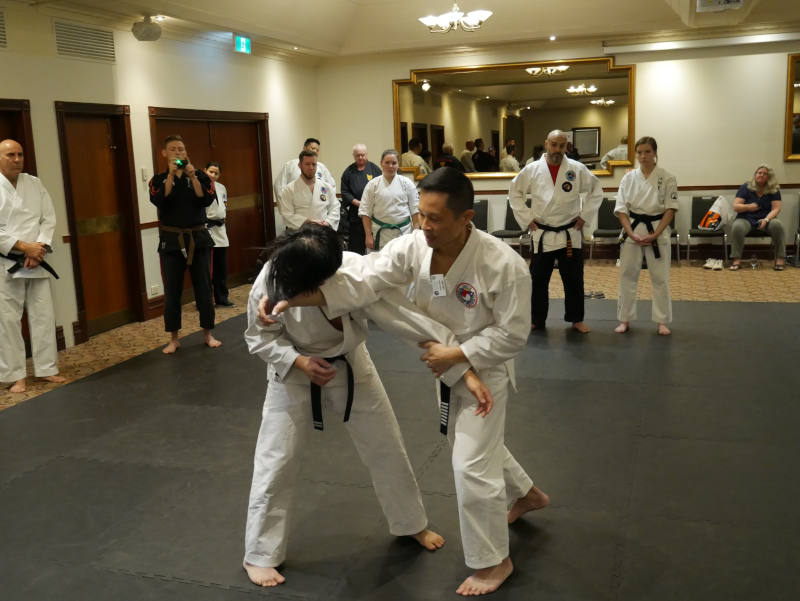
Is that a block, a strike, or a double strike – Colin at AMAHOF 2022 small

To explore the technique, we stand in front of an opponent who throws a slow attack, which we deflect. Then a slow combination, which we also deflect. As our ability improves, the difficulty of the attack increases. Eventually the two‑man exchange approaches full speed, and we can then move testing into an unscripted combative exchange. This is not done at full pace; both partners move proportionately to the other. This free‑flowing and ultra-safe environment lets us study whatever technique against a live opponent, and helps with the ongoing functional analysis.

This unscripted exchange has shaped our pattern analysis more than anything else. We’ve learned that every slice of motion can be used to deflect, cover, or strike. With a wide-ranging remit, we take aspects of the middle block, for example, using it to deflect a straight cross, and drill it, running variations upon variations. We do the same with the knife‑hand guarding block, the twin‑fist block, even an elbow strike. Eventually techniques blur and blend, becoming simply the read of distance, timing, angles of entry, and the expansion of your physical structure to connect with the opponent.

After my first book, I found myself writing a story set in 19th‑century Ryukyu, during the Japanese subjugation of the islands. The cultural pressure and financial hardship pushed former bureaucrats to develop a new training system called karate. As I researched the personalities and consolidated the historical canon, I began to understand how deeply Chinese martial arts, culture, and food influenced Ryukyu. That pushed me to study Chinese‑based systems and expand on the basic concepts I’d explored in my first book.

As opportunities arose to explore Chinese‑based systems, I found concepts that immediately clarified gaps I’d carried for years. The idea of fajin, and the broader principles of internal energy manipulation, offered powerful analogies for kinetic chaining and kinesthetic movement. They revealed how leverage, structure, and intent could be directed through the body to destabilise an opponent.

If you’re curious what this looks like in practice, I demonstrate a basic soft‑style leverage application in this clip: Hard-Style Meets Soft Style: Ryukyu Karate Applications You’ve Never Seen Before (2:44-3:21).

Even a basic understanding of soft-style principles have given me a deep appreciation of how muscle control, structure, and intent could be used to destabilise an opponent. Hard‑style training had always hinted at these dynamics, but here they were expressed cohesively, with a precision that made the underlying mechanics unmistakable.
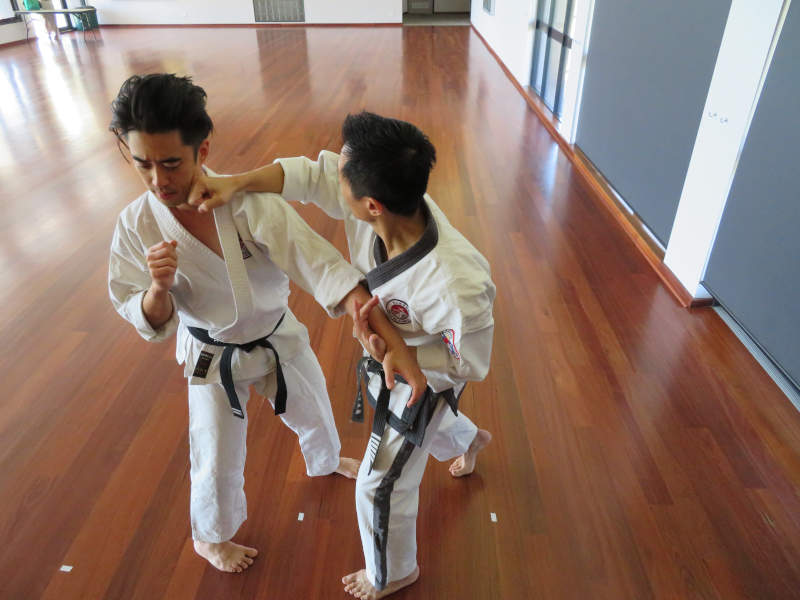
Q. Is there a counterpunch in the technique, Mr. Miyagi? A. Ask drum

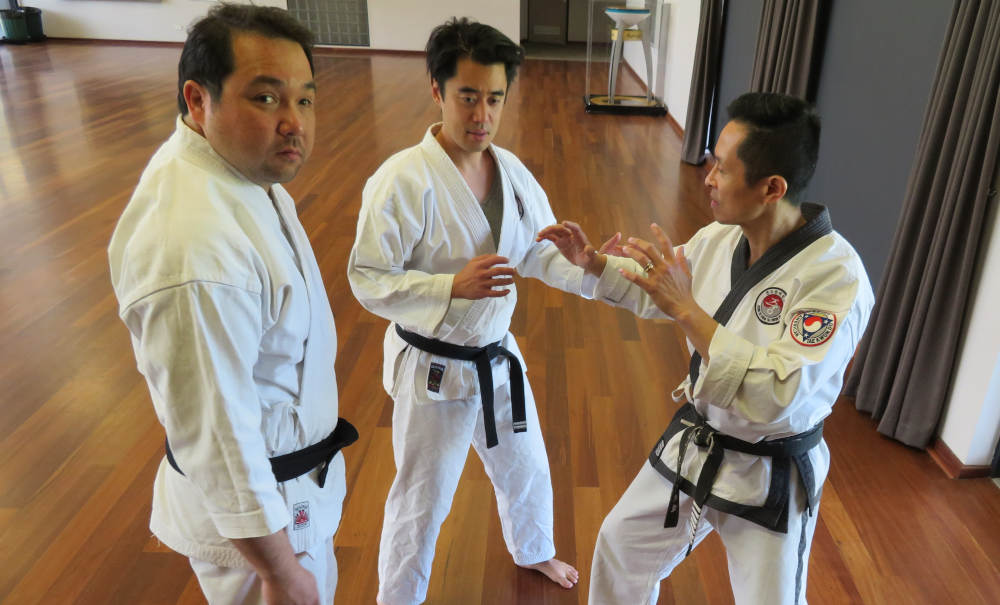
Behind-the-scenes at photoshoot for the book

With the middle block, the external training is still useful as it trains the practitioner to run interference on the opponent or weave through their defences. But inside the movement there could be more: the soft-style relay of waveform energy from the ground, through the body, into the opponent.

The middle block could be dismissed as arms waving in the air. But the hands should be waving, and transmitting the ground force travelling through the body. When the middle block connects, you’re sending that entire waveform through the opponent. Do you send it as a vertical pulse? Do you shake the tree? Do you float him while striking? Do you sink the energy so his hips collapse?

Or has the opponent trapped your limb, and you’re using the middle block to disrupt his centre of gravity before countering with a blitz?

When that black belt asked if I was using Wing Chun, he wasn’t wrong to see something unfamiliar. What he saw wasn’t a different style, it was the result of twenty years of digging beneath the surface of my own tradition. The forms gave me the entry point, but the real lessons came from what was there before the form: the centreline control, the kinetic chaining, the soft‑style leverage, the waveform mechanics that had never been spoken of aloud. I certainly didn’t set out to reinvent anything, and I never chased other arts to fill a gap. I simply followed my practice until it led me here, to a place where the form is no longer the destination, but a doorway to the lessons it always meant to teach.

Breaking Through Application One, Full Article Series:

Breaking Through Application Two, Full Article Series:

Bio: Colin Wee is a Singaporean author, martial‑arts instructor, and cultural historian whose four‑decade practice spans Asia, Australia, and the United States. Known for his analytical approach and deep tactical insight, Colin blends historical research with lived experience to illuminate the human stories behind martial traditions. He is the founder of Joong Do Kwan in Perth, Western Australia, and serves as Secretary of the Australasian Martial Arts Hall of Fame (see About the Author).

You can get a copy of Breaking Through: The Secrets of Bassai Dai Kata from Amazon or directly from the author at Ingram Sparks.

© 2023 Colin Wee. Images reproduced from Breaking Through: The Secrets of Bassai Dai Kata. All rights reserved. No part of these images may be reproduced or distributed without permission.
Why the Book Was Only the Beginning

Breaking Through Application 1 now available at Patreon https://www.patreon.com/ColinWee/posts/bassai-wrist-165715338

Bassai Dai’s Opening Sequence now Featured on Patreon

When I published Breaking Through: The Secrets of Bassai Dai Kata, we had captured a snapshot of insights from our multi‑year deep dive into the form. What I didn’t expect was how much more we would grow since writing the book.

While a huge amount of effort was invested, every application in the kata has layers that didn’t make it into publication. The book’s print format couldn’t contain everything. My publisher GM Mike Swope (RIP) from Moosul Publishing Inc. even floated the idea of producing DVDs to complement the applications. At the time, that wasn’t feasible.

But now, Patreon provides an opportunity for us to take this project to the next level.

Patreon gives me the space to revisit each application, add material that couldn’t fit into the book, and present ideas and further insights through photos, seminar clips, coaching analysis, and long‑form explanations. It’s the perfect channel that Bassai Dai and Breaking Through deserves.

This blog post introduces the first instalment of that journey on Patreon: Application One, Full Article Series.

Why Application One Needed More Than the Book Could Offer

Most hard style practitioners perform kata thousands of times without ever asking what value it actually offers, or accept without question the very sparse and limited explanations when questioned of its functionality. Bassai Dai’s opening sequence (Step 1a–1b), for instance, is one of the most underrated parts of the kata, relegated to being a simple wrist release skill.

When I wrote the book, I had to make hard decisions:

  • Which photos to include
  • Which applications to prioritise
  • Which sequences served the broader learning pathway

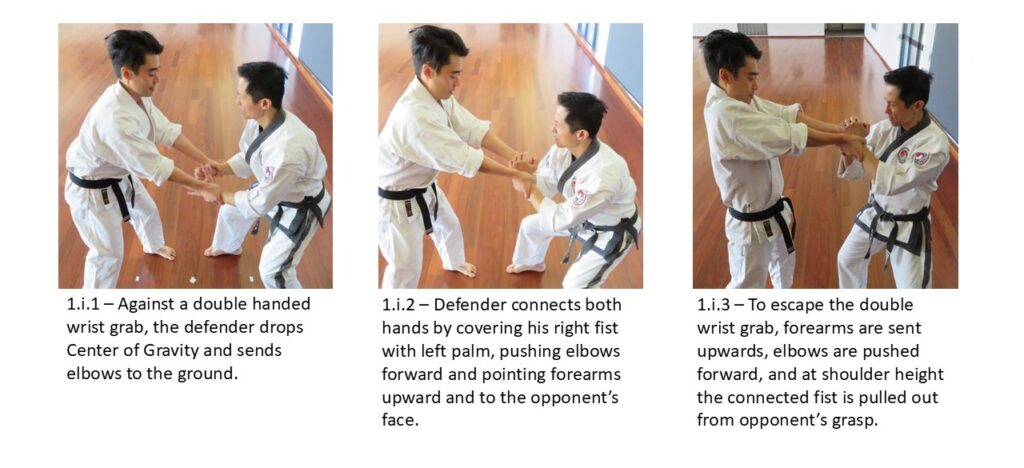
Some material that perfectly matched the kata, including a wrist‑release sequence that mirrors Step 1a–1b, didn’t even make the final cut. Not because it lacked value, but because it didn’t fit the pedagogy of the book.

Patreon allows me to restore that material, explain why it matters, and show how it connects to the rest of Application One.

Why Patreon Is the Right Platform for This Work

A book can only do so much, and this is the kind of content that simply doesn’t fit neatly into print. It needs space. It needs multimedia. It needs time. Fortunately, Patreon gives me all of that, and gives readers a way to follow our journey with Bassai Dai in real time.

Breaking Through Application One, Full Article Series

Application One begins with a jab-cross defence, moves into a head‑capture sequence, and a takedown of the opponent. The Patreon series expands this significantly.

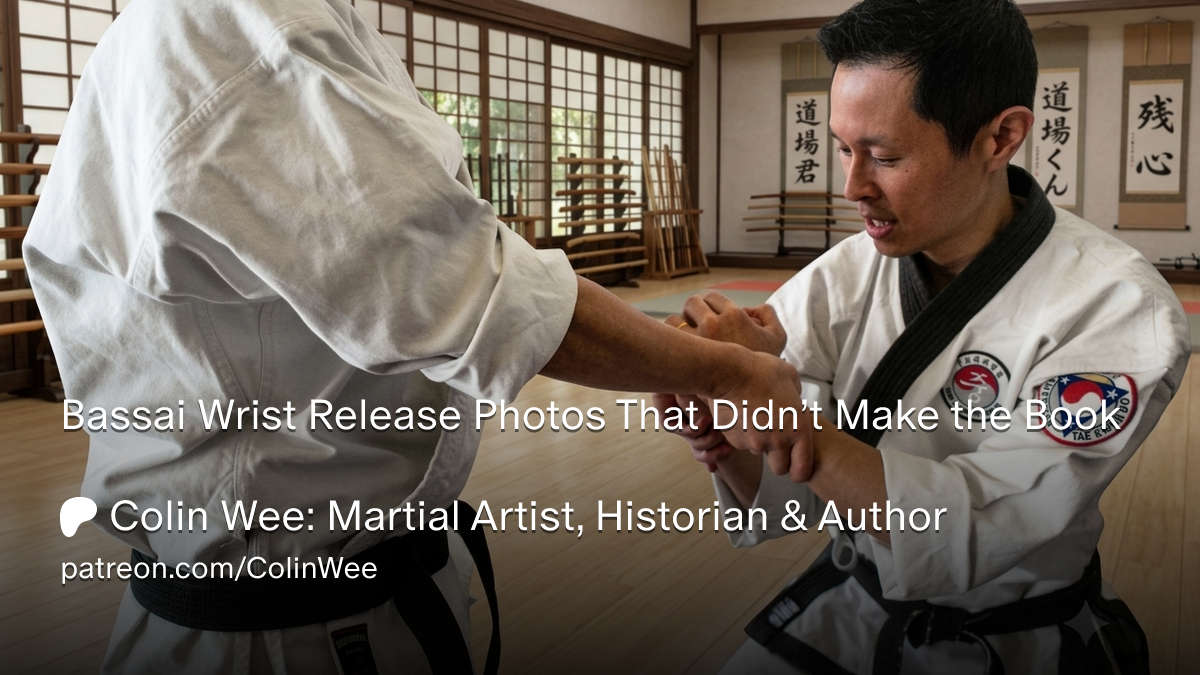
1. Free Article: Bassai Wrist Release Photos That Didn’t Make the Book

Bassai Dai Application One Photos that didn't make the book but are now shared through Patreon.

A behind‑the‑scenes study of the photos that mirror the opening sequence of Bassai Dai kata, why they didn’t make it into Breaking Through, and why they do matter.

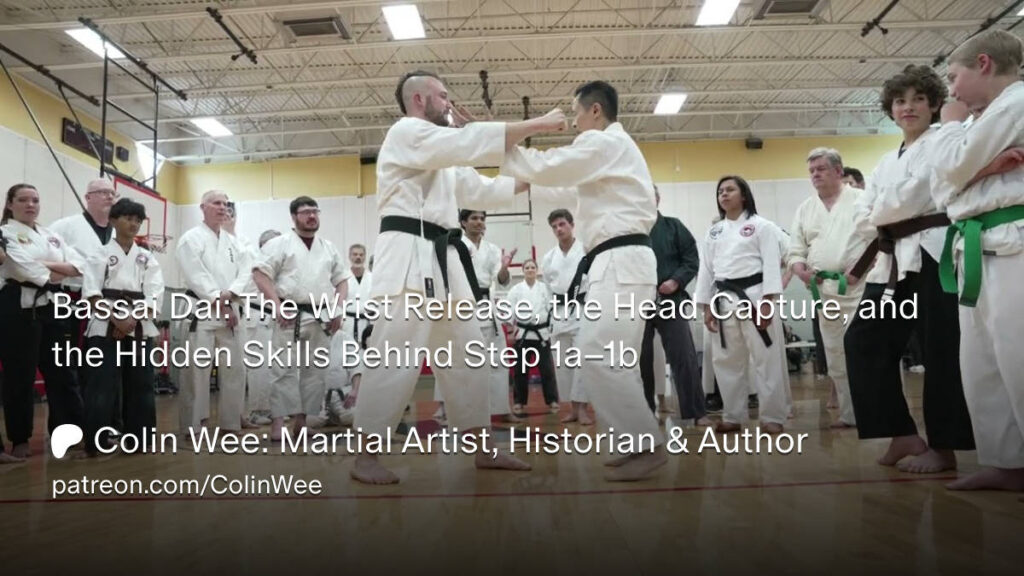
2. Premium Article: Bassai Dai: The Wrist Release, Head Capture, and Hidden Skills Behind Step 1a–1b

Bassai Dai Application One Hidden Skills shared in Seminar Video through Patreon https://www.patreon.com/ColinWee/posts/bassai-dai-wrist-165716897

A full breakdown of the application, including:

  • exclusive seminar video
  • photo sets
  • structural mechanics of kata and bunkai
  • footwork logic
  • how the practitioner controls opponent’s mass

3. Free Article: Training for Multiple Opponents in a Hard Style Context

Bassai Dai Application One Against Multiple Opponents

How awareness and movement apply when facing more than one adversary, including:

  • environmental awareness
  • spatial control
  • unexpected relevance from a soft style practice

Together, these three articles form the complete expansion of Application One to complement the material in the book. They provide material that didn’t fit into the book and the material that evolved after publication.

Why This Matters for Hard‑Style Practitioners

Hard‑style training often emphasises line drills, fixed stances, predictable sequences, single-opponent exchanges, and a reliance on strength and endurance to win the day. But Bassai Dai encodes skill Ryukyuan fighters needed for castle defence, not dojo sparring. Their combative approach required a depth of ability that can immediately enrich your hard style training. With Breaking Through Application One, Full Article series you can take the shortcut along the learning curve, and tap directly into the insights from our journey.

Where to Read the Full Series

Start with the two free articles:

Bassai Wrist Release Photos That Didn’t Make the Book → [link]

Training for Multiple Opponents in a Hard Style Context → [link]

Then explore the full premium series:

Patreon Premium: Breaking Through Application One → [link]

The Book Was the Beginning, Not the End

Bassai Dai is not a relic. It’s not choreography. It’s a protocol, a training approach that reveals more the deeper you go.

Writing the book opened the door. Patreon now lets both you and me walk through it together.

Patreon Button for Colin Wee

Bio: Colin Wee is a Singaporean author, martial‑arts instructor, and cultural historian whose four‑decade practice spans Asia, Australia, and the United States. Known for his analytical approach and deep tactical insight, Colin blends historical research with lived experience to illuminate the human stories behind martial traditions. He is the founder of Joong Do Kwan in Perth, Western Australia, and serves as Secretary of the Australasian Martial Arts Hall of Fame (see About the Author).

Bassai: Transforming Disadvantage into Advantage in Martial Arts and Life

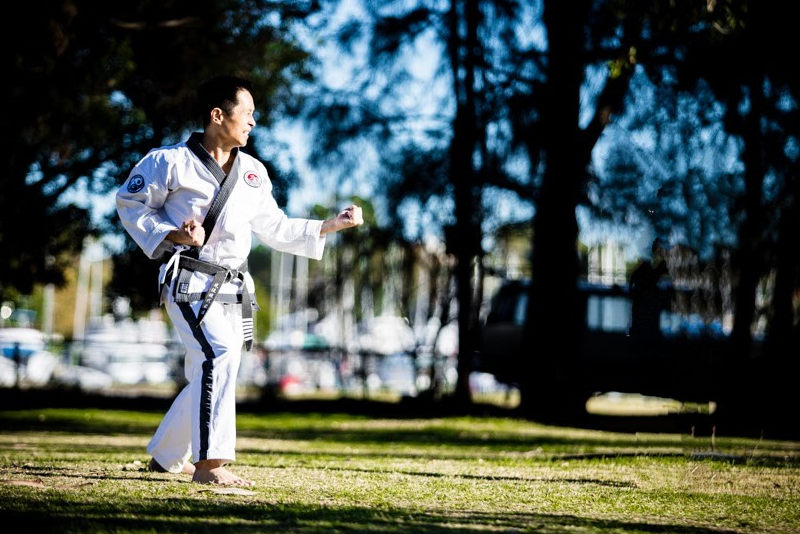
Author Colin Wee performs Bassai Kata
Bassai Bunkai for Multiple Opponents

Have you come across the kata Bassai Dai or Passai? Bassai has ubiquity across many Okinawan and Japanese karate systems, and even in some classical Korean martial arts. What makes it so compelling is how it prepares practitioners for unscripted, dynamic encounters — situations where nothing seems to go according to plan, especially when one is under duress.

This kata is part of the legacy system I trained in during the early 1990s through the American Karate and Taekwondo Organization. Many decades later, it then became the foundation of a book project I embarked on during the COVID pandemic of the early 2020s.

Of course, Bassai is not the only pattern that teaches tactics, adaptability, or the transformation of disadvantage into advantage. Any martial art taught by an effective instructor should cultivate those skills. So why did I spend so much time with this one kata? My obsession with Bassai was sparked by an encounter with renowned martial arts author Hanshi Bruce Clayton, PhD, in 2002. I reached out to Dr Clayton after reading Shotokan’s Secret, his compelling exploration to understand Okinawan martial art and karate pioneers of the 19th century. His research examined the purpose of their practice and revealed how they were linked to the protection of the Ryukyuan royal family.

Invited to share my book project by GM Peter Wong, I introduce Bassai Dai, and then ready myself to perform it as part of his 9th dan celebration.

What is Bunkai?

As my group and I returned time and again to Bassai’s choreography and applications, we pushed past any superficial concept of what is bunkai and discovered a training system built around anticipating resistance, expecting non‑compliance, and developing workarounds during collisions with an adversary. With the ideas Dr Clayton proffered about the inner and outer defenses of Shuri Castle, we began to see Bassai functioning as a cog in the broader security needs of the Ryukyu Kingdom. This meant the skills distilled from Bassai in the 21st century were guided directly from reflections on its functionality in 19th‑century Ryukyu.

To be honest, my focus on Bassai often came at the expense of the “normal” training done in a small martial arts school. Senior students benefitted from the deep dive into its source code, but junior practitioners may not have received the kind of attention they required during the early stages of their learning journey.

Transitioning to using Kata as a Syllabus

It was an unexpected honour to be invited to perform Bassai Dai at GM Peter Wong’s 9th dan celebration event.

Even so, the benefits to our school were undeniable as we transitioned to using kata as a syllabus and framework for learning. Concurrently, we gained insights into what works in traditional training, insights that aligned with an oral method of knowledge transfer.

Bassai thus became a keyhole through which we caught glimpses of martial arts as it was practiced by karate pioneers who were now long gone. We could almost hear their words of encouragement, cajoling us to develop a mindset centered on flexibility, efficiency, and on‑the‑fly problem solving.

Going into Martial Arts Publication

Breaking Through: The Secrets of Bassai Dai Kata winns 2023 Best Indie Book Award. What a thrill!

When we decided to publish our story, it was not to boast of newfound abilities, nor to proclaim superiority over others. We took on the publishing process because we felt we could no longer keep our findings to ourselves. We had learned early on that the more we shared, the more we received back in understanding. The book was simply an extension of that simple philosophy.

The name 抜塞 (Bassai) is often translated as “Break Through” or “Penetrate a Fortress.” Dr Clayton argued that, in the bodyguarding parlance of the Ryukyu Kingdom, a more accurate interpretation is “to extract from a fortification.” Either way, the term Breaking Through resonated deeply and became part of the title of my first book. It carries with it the hope that others will find inspiration to push past their own limitations, and find nourishment directly from the source material within their own lineage.

Publishing Breaking Through: The Secrets of Bassai Dai Kata was an expedition in itself, but it nudged me onto another huge adventure. Soon after its release, I began the journey to acquaint myself intimately with those martial art pioneers. My decades‑long obsession with Bassai now targeted its architects.

Looking for the Architects of Martial Arts Kata

Just saying I have gained more insight into the architects of Bassai would be selling the experience short. As I wrote the second book, I found myself transported back in time, commingling with the very people who depended on Bassai “for real.” These were the people who then developed karate as a hard‑style training system that would spread worldwide, eventually becoming the framework I had followed throughout my adult life. Like a detective, I worked meticulously through their lives, sifting between truth and fact, closing the loop on every fragment of information. Not stopping until I uncovered the origin story of these remarkable figures.

Embarking on my second publishing project was exhilarating, and my life’s mission had become clear. What we now practise came directly from the pioneers’ desperate efforts to resist subjugation by the Japanese Empire. Yet their legacy is not one of lamentation. Their message was one of hope, a dream for a better future and the nurturing of individual wellbeing.

While we may believe no other historical moment could rival the advancement and uncertainty of our own era, the Ryukyu Kingdom at the end of the 19th century shows otherwise. It was a time of incredibletechnological progress and prosperity as a regional trading hub. Then came incursions from Western powers, political instability, an imported pandemic, rising Japanese militarism, and even the obliteration of the Samurai class.

What were Historical Pioneers of Martial Arts like?

They were facing their death knell, yet still took the time to gift us lessons: staying self‑motivated, adapting under pressure, thinking critically, and transforming disadvantage into advantage. These remain profoundly relevant in the 21st century.

Whether you’re a martial artist or someone seeking personal growth, I encourage you to explore the insights I have gained through Bassai. Embrace its teachings. Apply its principles. You may be surprised by how deeply the practice of turning disadvantage into advantage can shape your journey.

Related article: Balsaek – Bassai a peculiar movement discussion

Bio: Colin Wee is a Singaporean author, martial‑arts instructor, and cultural historian whose four‑decade practice spans Asia, Australia, and the United States. Known for his analytical approach and deep tactical insight, Colin blends historical research with lived experience to illuminate the human stories behind martial traditions. He is the founder of Joong Do Kwan in Perth, Western Australia, and serves as Secretary of the Australasian Martial Arts Hall of Fame (see About the Author).