How Jion Reshaped my Training and Led me to Anko Itosu

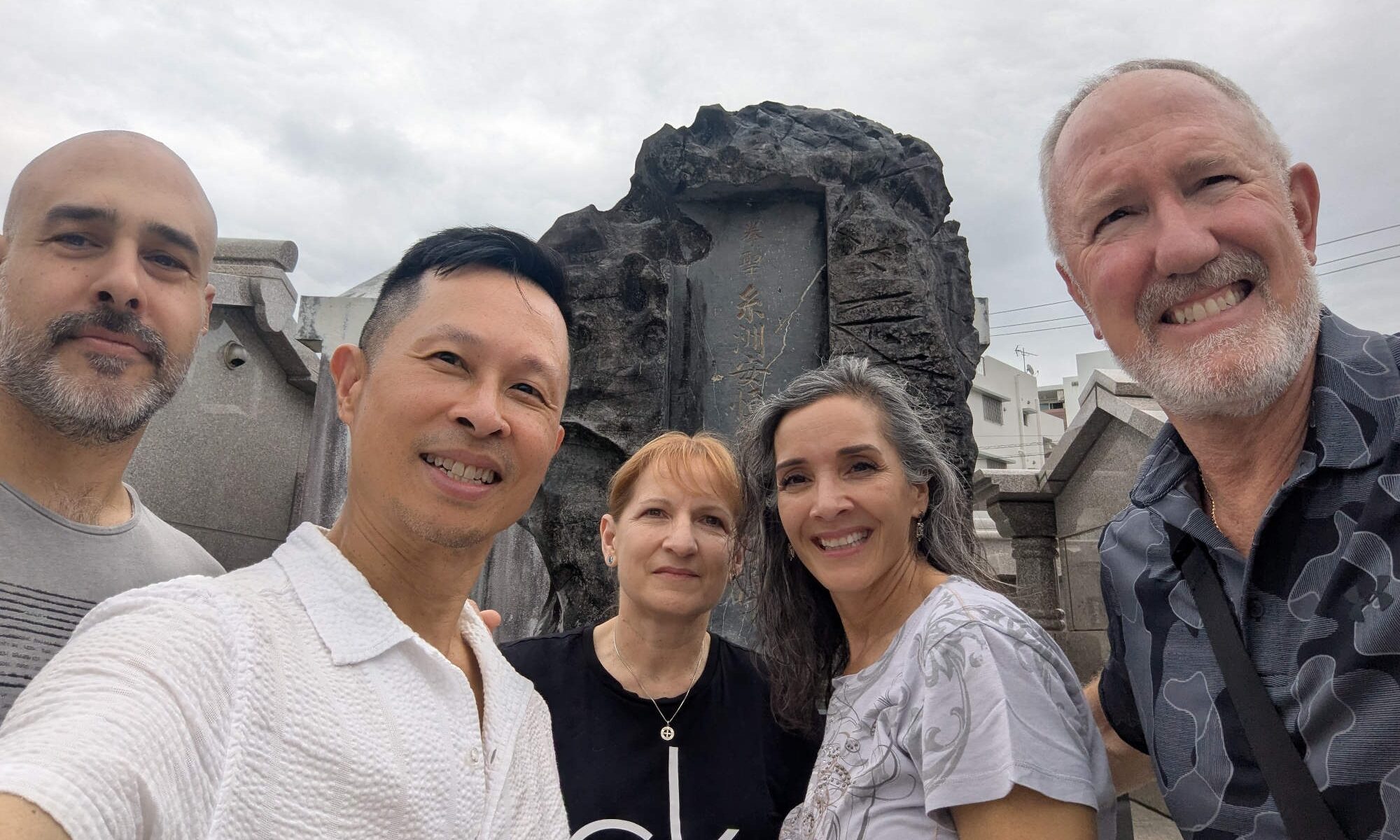
At Makabi Cemetery, Paying Respects to Itosu Anko 2025

This clip was filmed during my official induction into the Australasian Martial Arts Hall of Fame, an event delayed from 2020 until borders were reopened. Western Australia had been fortunate during that period; while the world was locked in, life continued with relative freedom, and I had the luxury of continuing my preparations for the demonstration and seminar portion of the AMAHOF weekend.

Many who watched my demo later shared with me they were expecting aerial kicks and acrobatics, the spectacle people associate with Taekwondo. What they saw instead was something far more traditional, and far more reflective of the work my school had been immersed in for years.

What do you expect from a martial arts seminar?

Jion Bamboo Forest Colin Wee 2023

My usual explanation is I wanted to share traditional applications, or perhaps I was demonstrating whatever my school happened to be practising at the time. The truth was that I’d been deep in the rabbit hole for many years leading up to this point. In the late 2010s I pulled my school into an intense, single‑kata focus. When COVID shut the world down, and when we realised how much insight that deep dive had produced, we finally gave in to the idea that had been circling around for years: this needs to become a book.

Motivated by our phenomenal progress, I switched tracks and plunged into the next kata Jion. Supporting me was the last remaining black belt at JDK. While I could say COVID decimated my school, the reality was that training one kata day‑in, day‑out was not for everyone.

How do you ‘find’ bunkai?

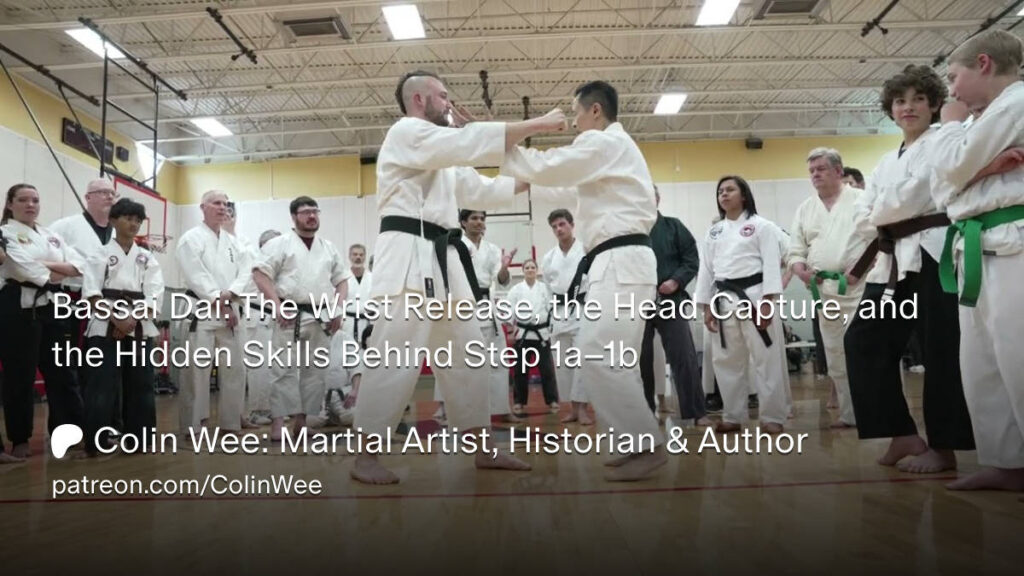
Our process is demanding. When we explore a kata or a combative system, we deconstruct every facet of it. We break it apart, test it against a non‑compliant opponent, rebuild it, and repeat. By the time this video was filmed, we had spent nearly three intense years taking Jion on a wild ride. And then we reached an event horizon: when we took stock of Jion, we were shocked to find at a high level it was nothing like Bassai. For those who don’t already know, Bassai was the kata that formed the backbone of my first book, Breaking Through: The Secrets of Bassai Dai Kata.

AMAHOF Gala 2022 Colin Wee Jion Seminar
The Jion seminar at AMAHOF 2022 was when we were standing at the cusp of embarking on an amazing journey back into the beginnings of hard style martial arts.

How do you start writing a Martial Arts Book?

That realisation forced us into frenzied research. Pulling on Jion’s threads was what led to unexpected discoveries about the pioneers of our martial art. One insight led to another, and before long an entire historical tapestry fell into view. It was then I knew I owed it to the world to begin work on Anko: The Lost Scrolls of Ryukyu.

I was apprehensive not quite believing I had the chops to adequately deliver the story. It was an epic beginning with the Japanese subjugation of Ryukyu in the 19th century, and culminating with beleaguered ex-bureaucrats attempting to preserve their culture by developing karate as a training program for the century ahead.

Acquiring Soft Power in Martial Arts

If you watch the demonstration, you can see my search for precursor know-how had influenced my own practice. My abilities were clearly shifting, though it wasn’t a deliberate move on my part to emulate the Ryukyuans. My research had led me to postulate their goals, and that required the retrofit of hard‑style and soft‑style skills back into kata and application work.

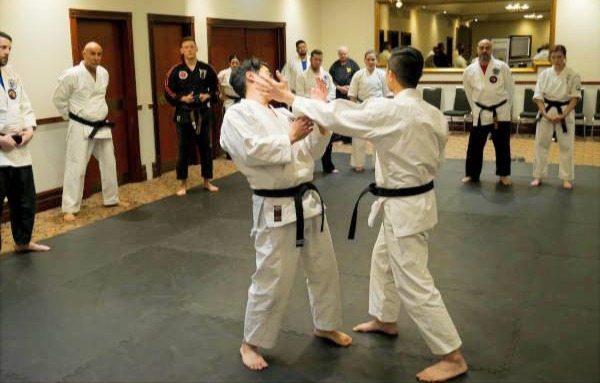
From 0:02–0:08, you can see me working through an application to bypass the tangle of arms – while my partner was deliberately offering active resistance. I remember noticing the difficulty as I narrated; eventually I had to trust my senses to take over, read his movement, bypass the resistance and displace his structure for the takedown.

What this is is me dealing directly with my opponent. I’m not “demonstrating” Jion nor trying to prove how closely my skills resemble its sequences. Yes, I’ve worked with Jion’s technical sequences. I’ve also varied them endlessly. And when the adversary opposes them, I naturally circumvent and bypass the obstruction instinctively. The read of the situation and response to the unscripted, dynamic attack come easily – because that is what the training helps you do. Jion informs the initiative, it does not limit it.

Likewise, I could have written another non-fiction book laying out a sequence of historical facts. I could have stuck rigidly to historical cannon, the way many insist application bunkai must resemble the kata. But would that do justice to the story though? Or is it more meaningful to feel their journey, like the way I’m now pushing past hard-style training into soft-style tactics.

That, I believe, is the truth martial artists actually want.

Related: Martial Arts Tour to Okinawa

Bio: Colin Wee is a Singaporean author, martial‑arts instructor, and cultural historian whose four‑decade practice spans Asia, Australia, and the United States. Known for his analytical approach and deep tactical insight, Colin blends historical research with lived experience to illuminate the human stories behind martial traditions. He is the founder of Joong Do Kwan in Perth, Western Australia, and serves as Secretary of the Australasian Martial Arts Hall of Fame (see About the Author).

Wanneroo Martial Arts Seminar by Colin Wee

Guest Contributor Leonard Montagnana

Waneroo, Perth, 2 Dec 2024. Kyoshi Peter Hunt hosted a session to explore concepts in the book Breaking Through: The Secrets of Bassai Dai Kata. In that seminar, we looked at the underlying thought process which led to the publication which we referred to as “The JDK Method.”

Guest Contributor Shihan Leonard Montagnana participated in the Wanneroo event, and we’re excited to share his report on AJJJCBFI’s Academy News Summer 2025 Edition #95 below.

What is Bunkai?

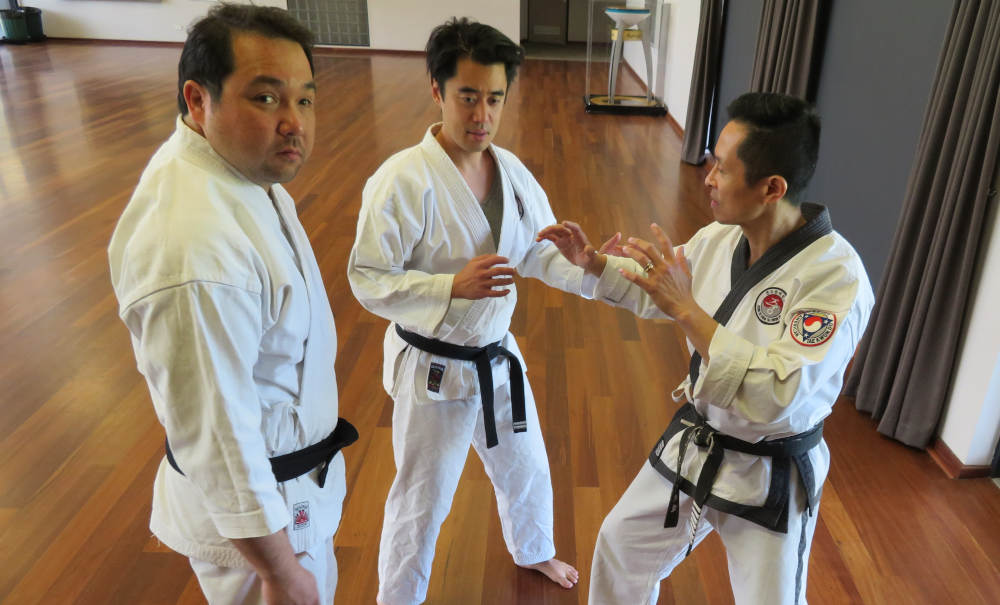
The JDK Method is a distillation of two decades of work to answer the question “What is Bunkai?” It firstly considers the vagaries of preemption. Under duress, practitioners are hard pressed to read the combative landscape and accurately predict what is happening.

The other questions that may be asked are “What attack is coming my way?” or “Is it a left or right handed strike?” For this, we advocate for techniques to be used as multitools. Ideally, your one technique should apply to a left side attack, as does to a right side attack. Secondly, we assume failure of technique. The opponent is there to oppose you. Thus, it is to your advantage to prepare for that opposition. If resistance could shut down your tactic at any point, train for workarounds, and draw freely from your library of skills.

If you bunkai to you is simply one solution to one problem, you may need to revisit your training pedagogy. What is the end goal your training is leading you towards? Is it choreography? Or is it to acquire fight IQ?

The Breaking Through book eventually leads to the work on my historical fiction manuscript. For those practitioners who think a novel is beneath them, that operative word ‘fiction’ is there only so I may pick apart the facts from the truths. Stick with me, it’s going to be a compelling ride!

📖 Flip through Breaking Through here and then get your free Book Club Kit

Bio: Colin Wee is a Singaporean author, martial‑arts instructor, and cultural historian whose four‑decade practice spans Asia, Australia, and the United States. Known for his analytical approach and deep tactical insight, Colin blends historical research with lived experience to illuminate the human stories behind martial traditions. He is the founder of Joong Do Kwan in Perth, Western Australia, and serves as Secretary of the Australasian Martial Arts Hall of Fame (see About the Author).

Soft‑Style Power and Ryukyu’s Hidden Mechanics: A Behind‑the‑Scenes Look at My Dallas Seminar

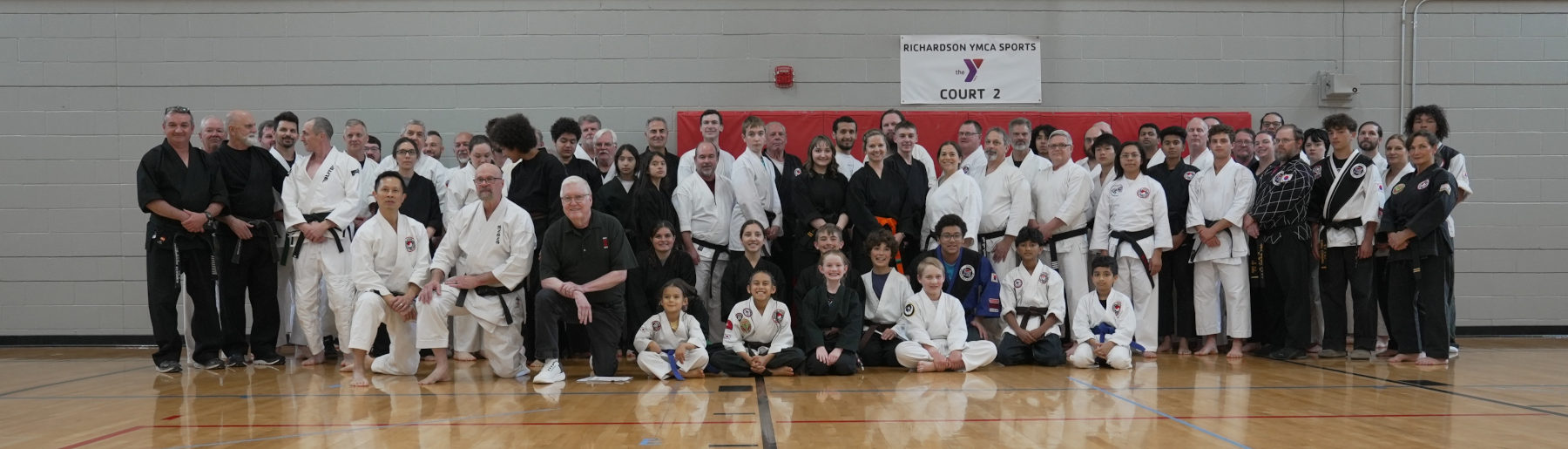
AKATO Dallas 2026 Group Picture with Seminar Leaders and GM Keith Yates

During AKATO’s 50th Anniversary weekend in Dallas (March 2026), I taught a session that allowed me to share the research shaping Anko: The Lost Scrolls of Ryukyu. Much of my work over the past few years has involved reconstructing how Ryukyuan retainers combined hard‑style initiative with soft‑style internal mechanics, a blend that’s rarely seen in modern training.

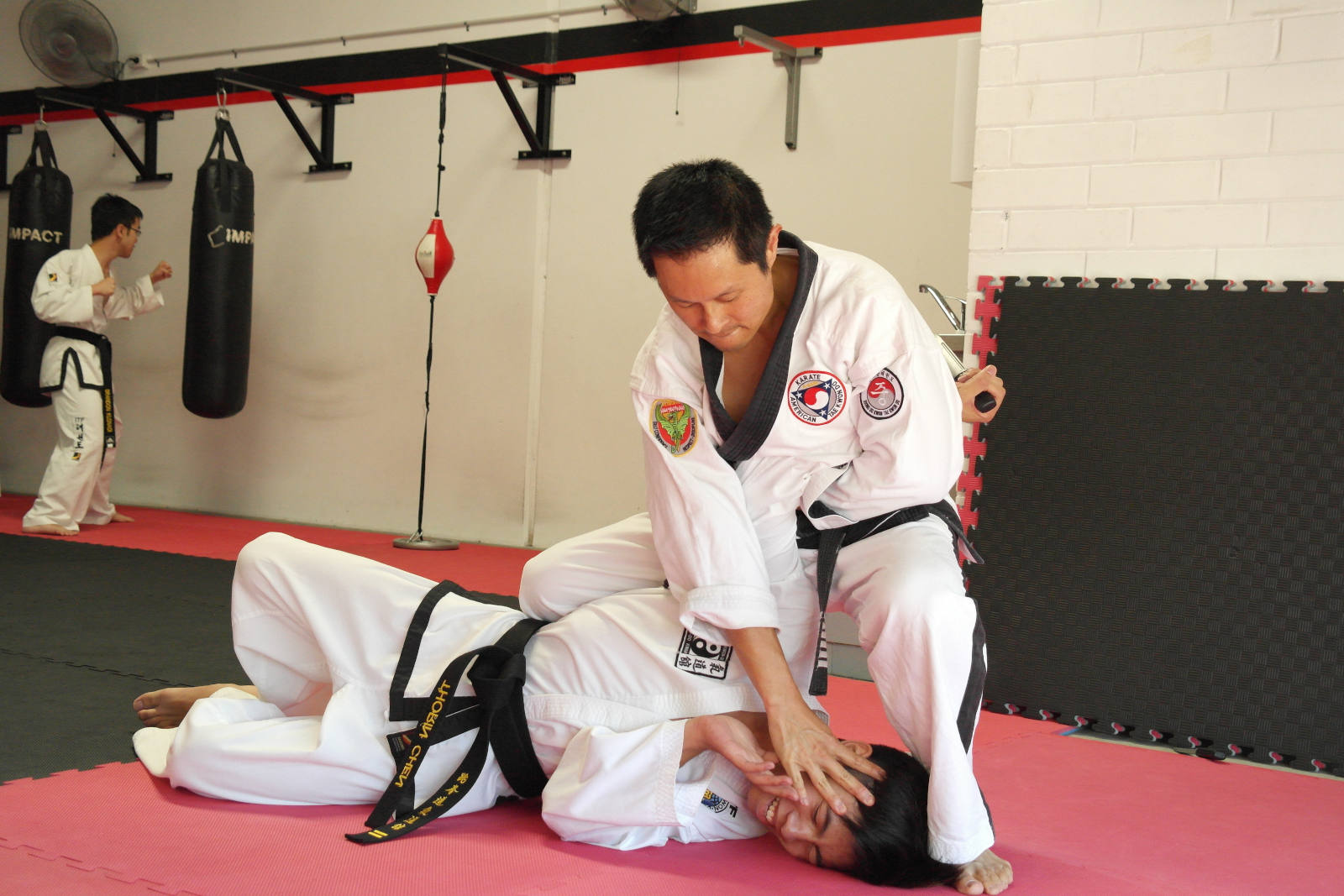
The demonstration opened with an application drawn from Nam Seo Hyung: closing distance, prompting reaction, and using circular movement to create openings along the centreline. From there, the sequence branched into two close‑quarter variations inspired by Jion, each exploring a different way to manage the opponent’s structure: either through limb control or through neck manipulation, and balance disruption.

What is the difference between hard-style v soft-style martial arts?

For many practitioners in the room, this was unfamiliar territory. Hard‑style systems often emphasise direct power, while soft‑style methods rely on timing, whole‑body coordination, and subtle changes in pressure. Bringing these ideas together and showing how Ryukyuan retainers may have used them in real conflict, created some dramatic moments. With very little visible movement, my training partner’s balance was broken and his momentum carried him across the floor. In another variation, a circular pulse around the neck opened the way for a controlled takedown and a simulated weapons check.

What I hoped to share wasn’t a highlight reel of ‘lethal’ techniques, but a window into the research process: how historical context, body mechanics, and cross‑style exploration can reshape our understanding of a fighting system. Ryukyu’s retainers were small in stature, but they relied on efficiency, teamwork, and a fusion of ideas to maintain advantage in asymmetrical situations. That blend continues to fascinate me, and it’s a core part of the world behind Anko: The Lost Scrolls of Ryukyu.

If you’d like to see a portion of the Dallas session, the video is available at:

👉 https://youtu.be/HvdC0uz2tM4

Do you practice like this? Would love to see what you’re doing with your system. If you’re on Goodreads, drop a question there.

Related: Exploring Past Your Comfort Zone: Colin’s Martial Arts Seminar in Schenectady, NY 2024

Bio: Colin Wee is a Singaporean author, martial‑arts instructor, and cultural historian whose four‑decade practice spans Asia, Australia, and the United States. Known for his analytical approach and deep tactical insight, Colin blends historical research with lived experience to illuminate the human stories behind martial traditions. He is the founder of Joong Do Kwan in Perth, Western Australia, and serves as Secretary of the Australasian Martial Arts Hall of Fame (see About the Author).

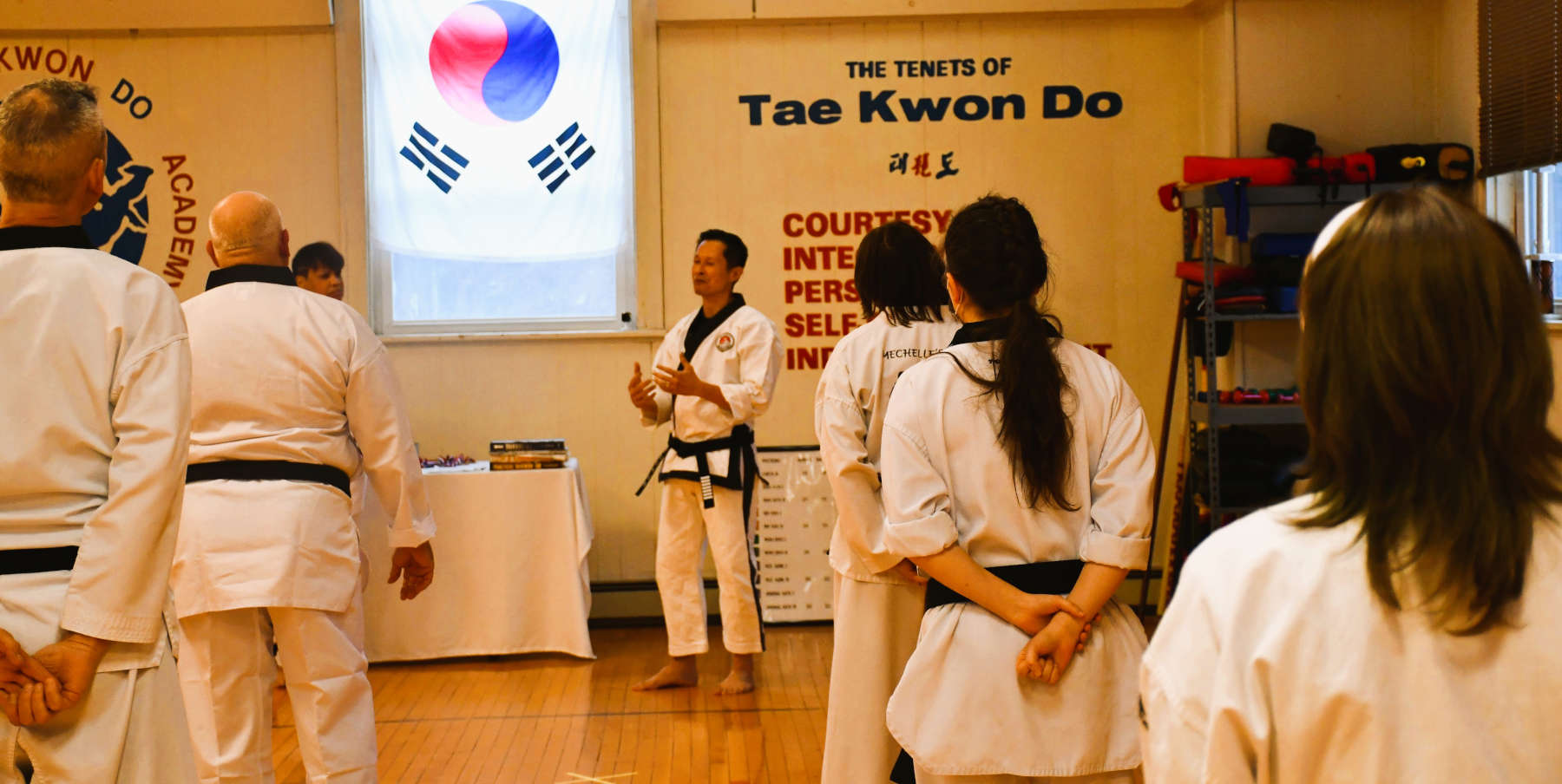
Exploring Past Your Comfort Zone: Colin’s Martial Arts Seminar in Schenectady, NY 2024

Schenectady 2024 Seminar by Colin Wee

A trip to JDK USA Schenectady, New York, for a martial arts seminar in January 2024 pushed me outside my comfort zone. It followed a successful seminar and book launch in Dallas the previous year.

New York felt daunting. It was uncharted territory, a stark contrast to the familiarity of Dallas. Yet, it presented an excellent opportunity to strengthen my working relationship with host Master Will Just

Will had connected with me five years prior, and was my demonstration partner in Dallas. He was captivated by training methodology, and the emphasis on extracting practical applications from traditional forms.

When my wife’s work led to a short stint in New York, I reached out and encouraged Will to organize a seminar. The timing wasn’t ideal: as the holidays and harsh winter would decrease attendance and ticket sales. Undeterred by the challenges, Will, fueled by his experience in Dallas, mobilized his network, visited schools he wasn’t connected with, and promoted the event feverishly.

Getting to my martial arts seminar

Traveling from Australia was an adventure itself, and after a week trampling around Manhattan with my wife, I took the three hour train ride up to Schenectady. It was good to see two familiar faces : Will Just, and long time JDK Associate Jeff Palm. Taekwondo Times Editor Jack Berry, whom I had connected with just the week earlier had also traveled up from Manhattan with me.

The seminar focused on unlocking the hidden potential of traditional forms and exploring their practical applications. We emphasized the importance of anticipation, sensitivity to the opponent, and circumventing the opposition. While the material took participants to the edge of their comfort zone, it was good seeing enthusiastic smiles, and the willingness to give things a go.

A highlight was witnessing a visiting Grandmaster seamlessly blend her long-time police experience with the seminar material, demonstrating the inter-relatedness of tactical skill.

Expanding my martial arts network

This journey to Schenectady was far from being just another martial arts seminar. It reaffirmed the value of venturing outside comfort zones, embracing the unexpected, and fostering meaningful connections. Directly inspired by the visit, Will Just moved to establish a new branch of JDK to develop his own martial arts training group.

This is a reminder that growth often lies beyond familiar territory, and that stepping outside our comfort zones can open doors to new possibilities and enrich our lives in profound ways.

Related: Soft-Style Power and Ryukyu’s Hidden Mechanics: A Behind-the-Scenes Look at My Dallas Seminar

Bio: Colin Wee is a Singaporean author, martial‑arts instructor, and cultural historian whose four‑decade practice spans Asia, Australia, and the United States. Known for his analytical approach and deep tactical insight, Colin blends historical research with lived experience to illuminate the human stories behind martial traditions. He is the founder of Joong Do Kwan in Perth, Western Australia, and serves as Secretary of the Australasian Martial Arts Hall of Fame (see About the Author).

Okinawa Reflections

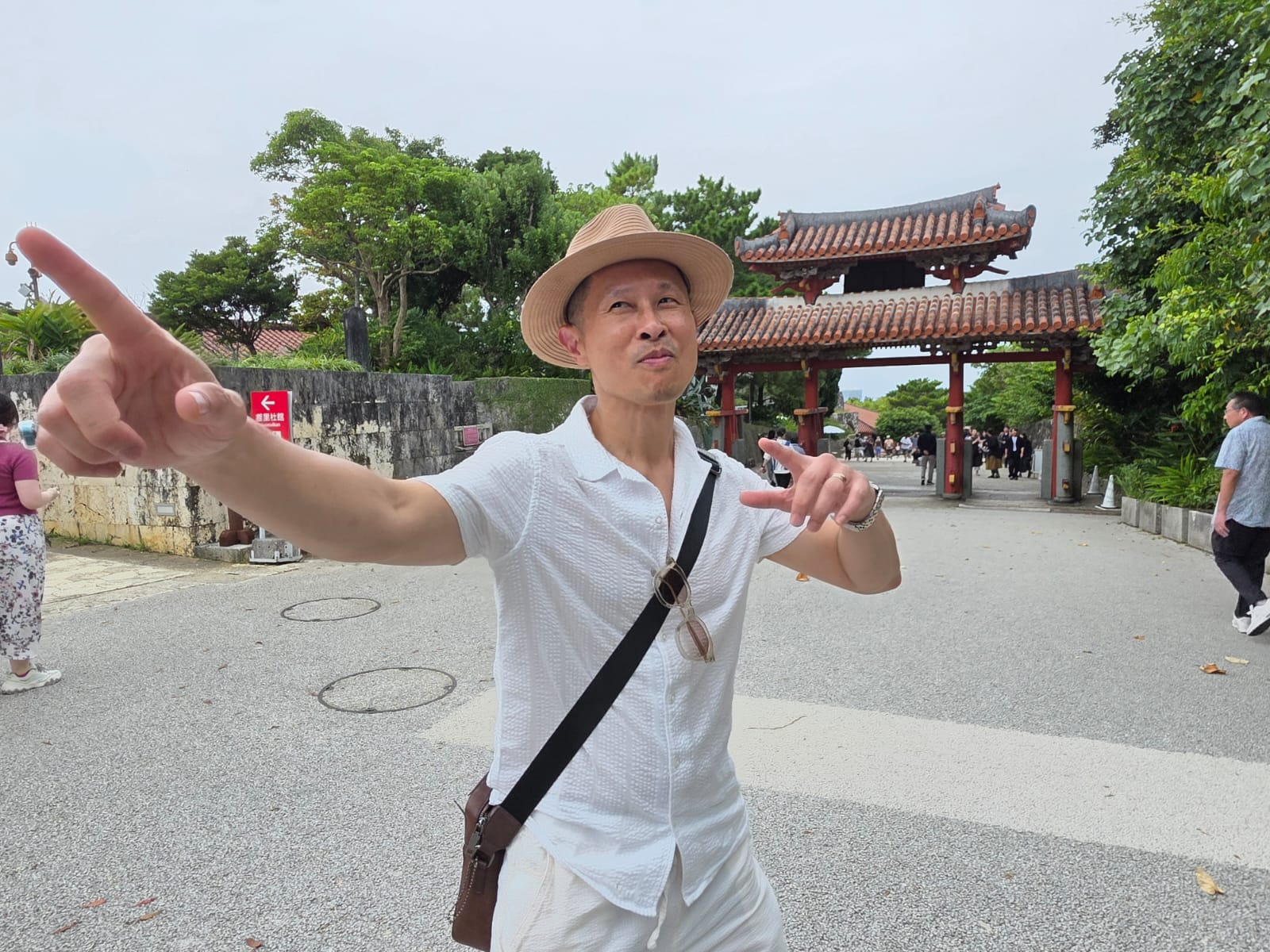
Colin Wee tours Shuri Castle. Standing in front of Shureimon for the first time.

In October 2025, I travelled to Okinawa as part of my ongoing research for a historical fiction manuscript that is set in 19th‑century Ryukyu. This new book project follows a group of bureaucrats navigating the political and cultural pressures of the Japanese annexation, and I couldn’t write about that world responsibly without spending time there myself. Even though the work is historical fiction, I wanted to avoid grossly misrepresenting the people, the culture, or the context I was drawing from.

During the trip, I had the opportunity to teach at a Master Instructor Seminar held at Midorigaoka Park in Naha coordinated with Okinawa Karate Day. My session focused on Jion kata bunkai, using applications and tactical logic that tie into themes from the manuscript. The work blended structural mechanics, hard‑ and soft‑style concepts, and principle‑based interpretation. It was a good chance to share ideas in front of expert practitioners who enjoy the roots of these traditions as much as I do.

Finding where Anko Itosu and Matsumura Sokon are buried

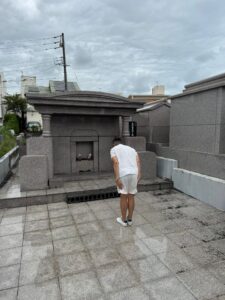
One of the moments that has stayed with me wasn’t from the seminar itself, but from a quiet visit I made with our small group to the graves of Matsumura Sōkon and Itosu Ankō (Visit Matsumura Sokon’s grave 26°13’28.7″N 127°42’20.4″E Google Map: 6PF4+V7 Naha and Itosu Anko’s grave – 84m SE of Matsumura’s grave, at Makabi. Directions: take monorail to ‘13 Naha City Hospital’, walk 700m Southwest of Station. Address: 3-10 Makabi, Naha City, Okinawa 902-0068, Japan.)

Standing there and speaking about their lives and contributions felt significant in a way that’s hard to articulate. It wasn’t about romanticising the past; it was simply to acknowledge the people whose work shaped so much of what we practise today. That experience grounded the rest of the trip for me.

Being in Okinawa helped me understand the environment, rhythms, and cultural texture I’m trying to represent in the manuscript. It also reminded me that martial arts is always connected to real people, real places, and real histories. That’s something I want to carry forward in both my writing and my teaching.

Author Colin Wee visiting with his protagonist Anko Itosu, Makabi Cemetary, Okinawa Oct 2025

As I prepare for the American Karate and Taekwondo Organization’s 50th anniversary event next March 2026, I’m looking at how to integrate insights from this research, the Jion applications I’ve been finessing, and material that aligns with AKATO’s lineage. My aim is the same as it has always been: to contribute in a way that allows us to understand and celebrate the traditions we’ve inherited.

I’d love to hear what you think. If you’re on Goodreads, drop a question there. Or if you’re an Okinawan business or organisation that identifies with my work 琉球武術支援, I would love to connect with you. What would you like to see in a story that supports the lived experiences of martial art pioneers? What would you expect of these historical characters?

—Colin Wee

Related: How Jion Reshaped My Training and Led Me to Anko Itosu, and Martial Arts Tour to Okinawa

Bio: Colin Wee is a Singaporean author, martial‑arts instructor, and cultural historian whose four‑decade practice spans Asia, Australia, and the United States. Known for his analytical approach and deep tactical insight, Colin blends historical research with lived experience to illuminate the human stories behind martial traditions. He is the founder of Joong Do Kwan in Perth, Western Australia, and serves as Secretary of the Australasian Martial Arts Hall of Fame (see About the Author).

Breaking Through Featured on the Cover of Totally Taekwondo Magazine

We’re thrilled to share a milestone moment: the cover artwork from Breaking Through: The Secrets of Bassai Dai Kata was selected for the May 2023 Issue 171 of Totally Taekwondo Magazine (see TotallyTKD on Facebook).

The issue also featured a full article titled “Breaking Through: The Writing of a Martial Arts Book,” which traced the journey behind the project: reaching out to publisher GM Mike Swope of Moosul Publishing LLC for guidance, shaping the manuscript through the pandemic, and launching the book in Dallas with the support of GM Keith Yates and the American Karate and Taekwondo Organization during their annual seminar in March 2023.

A huge thank‑you goes to Editor Stuart Anslow, who took a genuine punt on promoting a book that, at first glance, looks like a karate publication. The irony, of course, is that the insights in Breaking Through were forged through decades of traditional Taekwondo training. We’re grateful Stuart spotted that line of thinking, and his willingness to introduce the book to a wider Taekwondo audience.

The accompanying article offers a behind‑the‑scenes look at the writing process, the research, the unexpected discoveries, and the long, sometimes stubborn journey of turning one kata into a book. It highlights the mindset and methodology that shaped the project, and the community that helped bring it to life.

Being featured on the front cover of Totally Taekwondo is a celebration of shared roots, overlapping histories, and the mutual respect that continues to shape an open‑minded martial community of engaged, intellectually curious practitioners. We invite you to explore the cover, read the article, watch our short video snippet, and enjoy this moment with us.

Bio: Colin Wee is a Singaporean author, martial‑arts instructor, and cultural historian whose four‑decade practice spans Asia, Australia, and the United States. Known for his analytical approach and deep tactical insight, Colin blends historical research with lived experience to illuminate the human stories behind martial traditions. He is the founder of Joong Do Kwan in Perth, Western Australia, and serves as Secretary of the Australasian Martial Arts Hall of Fame (see About the Author).

Bridging the Gap: Exploring the Connection Between Taekwondo and Karate

Colin Wee Knife Defence with Kidokwan Perth and Damien Merrin 2017
GM Kelly Cox and Master Colin Wee, Rendokan Dojo, Richardson, TX, 2023
GM Kelly Cox and Master Colin Wee at Rendokan Dojo, Richardson, TX, 2023. GM Cox teaches a number of systems, one being a traditional system named Marudo Karate-do, and both he and Colin find great similarities in their approach to training.

For a long time, the relationship between Karate and Taekwondo has been framed as a rivalry. But when you peel back organisational identity, stylistic branding, and historical development, a different picture emerges. The real connection between these arts isn’t found in how they look today, but in how they function when practitioners are under duress and when stylistic expressions are not a value add to a combative exchange.

This article isn’t about proving that Karate and Taekwondo are the same. It’s about understanding why they diverged from a shared lineage, what they still share, and where their tactical advantage lies.

Early Korean Karate/Taekwondo: Hard‑Style, But Not Yet Standardised

Recent archival comparisons done by Ørjan Nilsen, show that early Korean Karate, the precursors of modern Taekwondo did not entirely resemble modern Shotokan (see Early Taekwondo was just Shotokan (it was and it wasn’t)). Early Korean practitioners did train in hard, direct techniques, and linear entries. They just lacked the polished standardisation that JKA would later impose on Japanese Karate, or that ITF would later impose on Taekwondo. While some stylistic comparisons from this era could even be made with Okinawa’s Shorin‑ryu lineage such comparisons could only occur because practitioners were still figuring out what “hard‑style” meant. Both groups had still some way to go towards the “pre‑refinement” stage of their hard‑style evolution.

What Hard‑Style Martial Arts Actually Is (And Isn’t)

Master Colin Wee with his teacher Shodai Bryan Robbins, Dallas, TX, 2006.
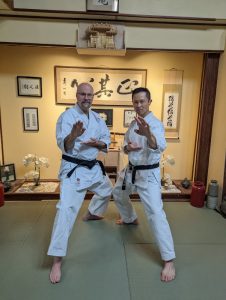
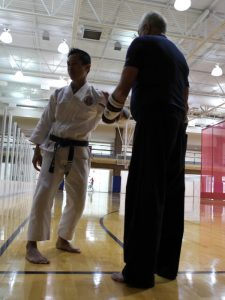
Colin Wee with his teacher Shodai Bryan Robbins, Dallas, TX, 2006. Mr Robbins taught Colin Traditional Taekwondo and Aikido. Here Mr Robbins “catches up” Colin on both hard style and internal concepts he’s missed over intervening years.

Most modern definitions of “hard‑style” come from a Shotokan‑centric lens: linear acceleration, percussive techniques, rigid stances, and Shotokan’s muscle lock-down. But this is an aesthetic definition, not a functional one.

A more accurate definition is that Hard‑style is blitz‑fighting tactics. This means rapid entries, chunked sequences, and the reuse of high‑yield solutions that overwhelm an opponent. Yes, linear acceleration matters. But the real power of hard‑style lies in pre‑emptive striking and overwhelming pressure.

This is why beginners rehearse single techniques in line drills, and why upper belts should be “chunking” functional combinations until they become fluent. Hard‑style is not about looking rigid. It’s about revving a tactical engine that compensates for low fight IQ.

Why Karate and Taekwondo Diverged

Both JKA and ITF faced the same organisational challenge, they both needed to scale a martial art to thousands of students.

Like all member-based organisations, the answer relied on standardisation.

  • JKA created a precise, repeatable system that depended on a muscle lock down called ‘kime’ for power transmission, taught concurrently with an ethical code, and supplemented by a text written by the Father of Modern Karate titled “Rentan Goshin Karate Jutsu.”
  • ITF created a codified, rhythmic, prescriptive system packaged with Taekwondo’s Tenets. This was differentiated by a sine wave concept of power generation, and a reliance on the Founder’s Encyclopedia of Taekwon-Do.

The words used sound different, but also so similar. Even across the divide, these were the moves necessary for growth. But there’s a cost to this standardisation.

Internal Mechanics: The Part Everyone Forgot

Colin Wee attends AKATO Annual in 2016, representing the Korean MA lineage through his uniform, while standing behind his teacher Sensei Mike Proctor.
Colin Wee attends AKATO Annual in 2016, representing the Korean MA lineage through choice of uniform, while standing behind his teacher Sensei Mike Proctor, and enjoying the camaraderie of cross-training.

Recently, through research into my second book, I had the good fortune to explore Chinese internal arts and its influence on Ryukyuan fighting systems. Yes, indeed, research into an Okinawan ‘hard-style’ kata led me to fajin and how it utilised concepts like leverage and directional vectors. From that insight, I was able to gain a unique perspective of Taekwondo’s Sine Wave, though not the stylised version performed in tuls.

Master Colin Wee showing tactics that are not quite hard style, AKATO Annual and 50th Anniversary Celebrations 2026, Dallas, Texas.

Similar to the engine behind White Crane, Southern Chinese boxing, and early Okinawan Tode, the Sine Wave’s use of compression, expansion, and the release of energy along specific angles had more in common than most could see.

During a recent seminar with an ITF group, I used these internal Chinese principles and sent a black belt flying. Not because I was doing “Karate” or “Taekwondo,” but because I was using functional mechanics which underly both arts. In all honesty, I could have compared the movement to Taekwondo’s Sine Wave as much as I could to Karate’s Kime.

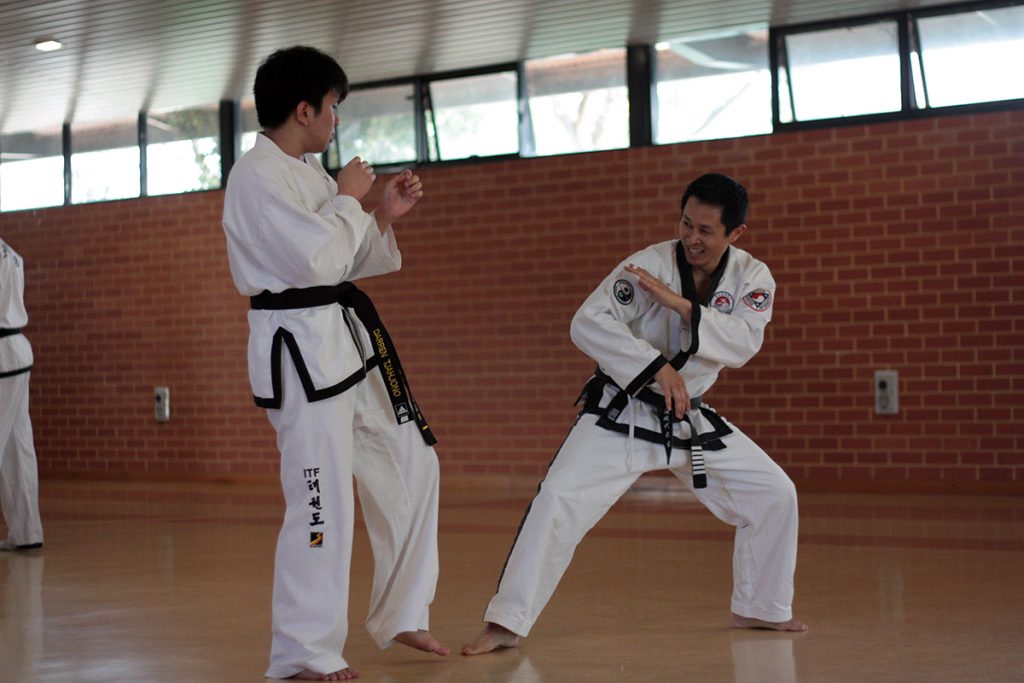
This ITF group shows that good training doesn't make them less good at Taekwondo. ApproachTKD Seminar in Aberdeen 2026.
This ITF group shows that good training doesn’t make them less good at Taekwondo. ApproachTKD Seminar in Aberdeen 2026.

The irony is that ITF practitioners perform sine wave every day, but its prescriptive choreography might not lead to this deeper potential. As my martial art colleague Dr Sanko Lewis has previously pointed out, sine wave has real value. Some of it comes to the fore in stand‑up grappling but only if practitioners are allowed to train in that manner (see The Sine Wave Motion as a Mnemonic Device for Joint-Locks and Throws).

Free Sparring as the Acid Test

When Karateka and Taekwondoin engage in dynamic exchanges, something predictable happens: many Karateka start punching like boxers, and many Taekwondoin start kicking like kickboxers.

Master Colin Wee mixing it up at Kidokwan Perth, 2014.

Under pressure, practitioners reach for the simplest, most accessible combative analogies available. Boxing and kickboxing offer simple mechanics, high‑yield tactics, intuitive movement, and a plethora of training resources available through YouTube.

Under duress, and when stylisation drops away, almost all practitioners simply default to functional movement.

The Bridge Between Karate and Taekwondo

Karate and Taekwondo do not need to be stylistically similar. They do not need to agree on aesthetics, pedagogy, or organisational identity.

What they do need is an understanding of where their tactical advantage lies beyond blitz logic, and functional mechanics. Style is a school’s training pedagogy. Style is their training method. Aesthetic style however is not the end goal.

When practitioners mature, many transcend stylistic signatures and move toward functional, adaptive, and personal expression. And that is where Karate and Taekwondo finally meet. Not in how they look, but in how they prepare students for growth.