
For a long time, the relationship between Karate and Taekwondo has been framed as a rivalry. But when you peel back organisational identity, stylistic branding, and historical development, a different picture emerges. The real connection between these arts isn’t found in how they look today, but in how they function when practitioners are under duress and when stylistic expressions are not a value add to a combative exchange.
This article isn’t about proving that Karate and Taekwondo are the same. It’s about understanding why they diverged from a shared lineage, what they still share, and where their tactical advantage lies.
Early Korean Karate/Taekwondo: Hard‑Style, But Not Yet Standardised
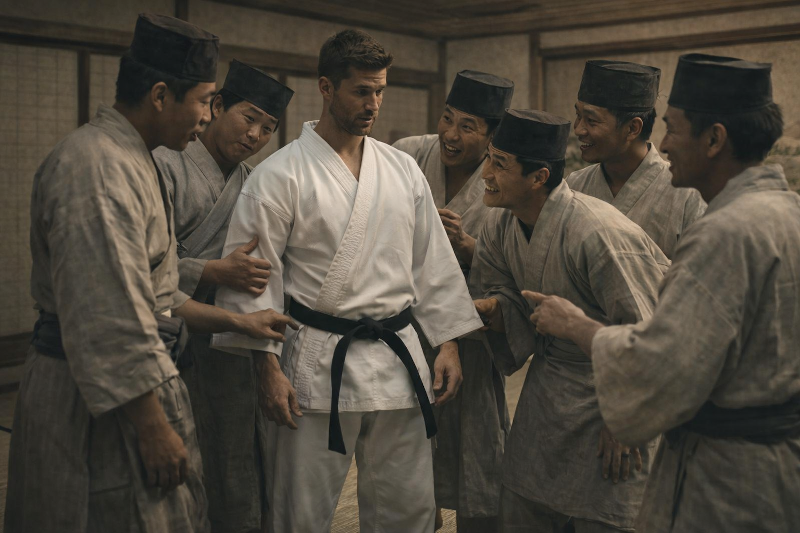
Recent archival comparisons done by Ørjan Nilsen, show that early Korean Karate, the precursors of modern Taekwondo did not entirely resemble modern Shotokan (see Early Taekwondo was just Shotokan (it was and it wasn’t)). Early Korean practitioners did train in hard, direct techniques, and linear entries. They just lacked the polished standardisation that JKA would later impose on Japanese Karate, or that ITF would later impose on Taekwondo. While some stylistic comparisons from this era could even be made with Okinawa’s Shorin‑ryu lineage such comparisons could only occur because practitioners were still figuring out what “hard‑style” meant. Both groups had still some way to go towards the “pre‑refinement” stage of their hard‑style evolution.
What Hard‑Style Martial Arts Actually Is (And Isn’t)
Most modern definitions of “hard‑style” come from a Shotokan‑centric lens: linear acceleration, percussive techniques, rigid stances, and Shotokan’s muscle lock-down. But this is an aesthetic definition, not a functional one.
A more accurate definition is that Hard‑style is blitz‑fighting tactics. This means rapid entries, chunked sequences, and the reuse of high‑yield solutions that overwhelm an opponent. Yes, linear acceleration matters. But the real power of hard‑style lies in pre‑emptive striking and overwhelming pressure.
This is why beginners rehearse single techniques in line drills, and why upper belts should be “chunking” functional combinations until they become fluent. Hard‑style is not about looking rigid. It’s about revving a tactical engine that compensates for low fight IQ.
Why Karate and Taekwondo Diverged
Both JKA and ITF faced the same organisational challenge, they both needed to scale a martial art to thousands of students.
Like all member-based organisations, the answer relied on standardisation.
- JKA created a precise, repeatable system that depended on a muscle lock down called ‘kime’ for power transmission, taught concurrently with an ethical code, and supplemented by a text written by the Father of Modern Karate titled “Rentan Goshin Karate Jutsu.”
- ITF created a codified, rhythmic, prescriptive system packaged with Taekwondo’s Tenets. This was differentiated by a sine wave concept of power generation, and a reliance on the Founder’s Encyclopedia of Taekwon-Do.
The words used sound different, but also so similar. Even across the divide, these were the moves necessary for growth. But there’s a cost to this standardisation.
Internal Mechanics: The Part Everyone Forgot
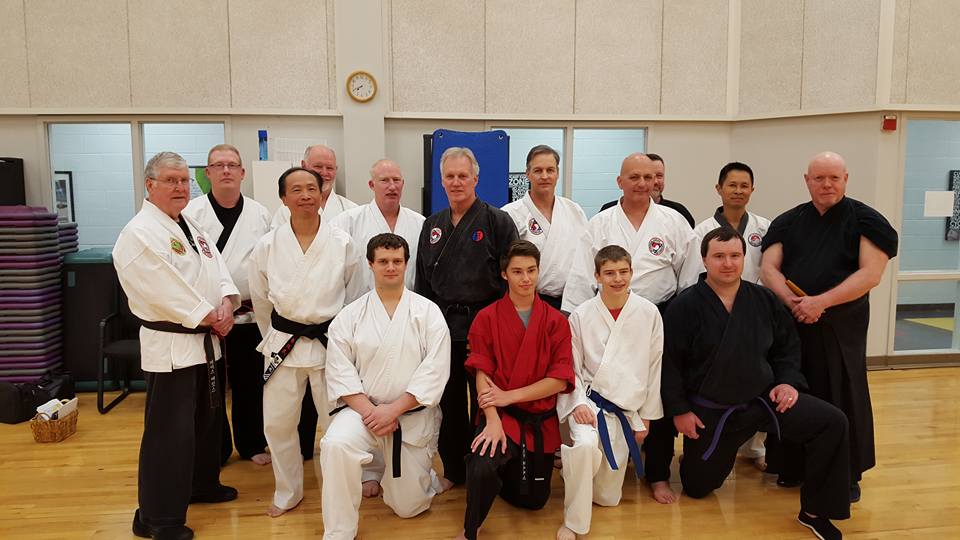
Recently, through research into my second book, I had the good fortune to explore Chinese internal arts and its influence on Ryukyuan fighting systems. Yes, indeed, research into an Okinawan ‘hard-style’ kata led me to fajin and how it utilised concepts like leverage and directional vectors. From that insight, I was able to gain a unique perspective of Taekwondo’s Sine Wave, though not the stylised version performed in tuls.
Similar to the engine behind White Crane, Southern Chinese boxing, and early Okinawan Tode, the Sine Wave’s use of compression, expansion, and the release of energy along specific angles had more in common than most could see.
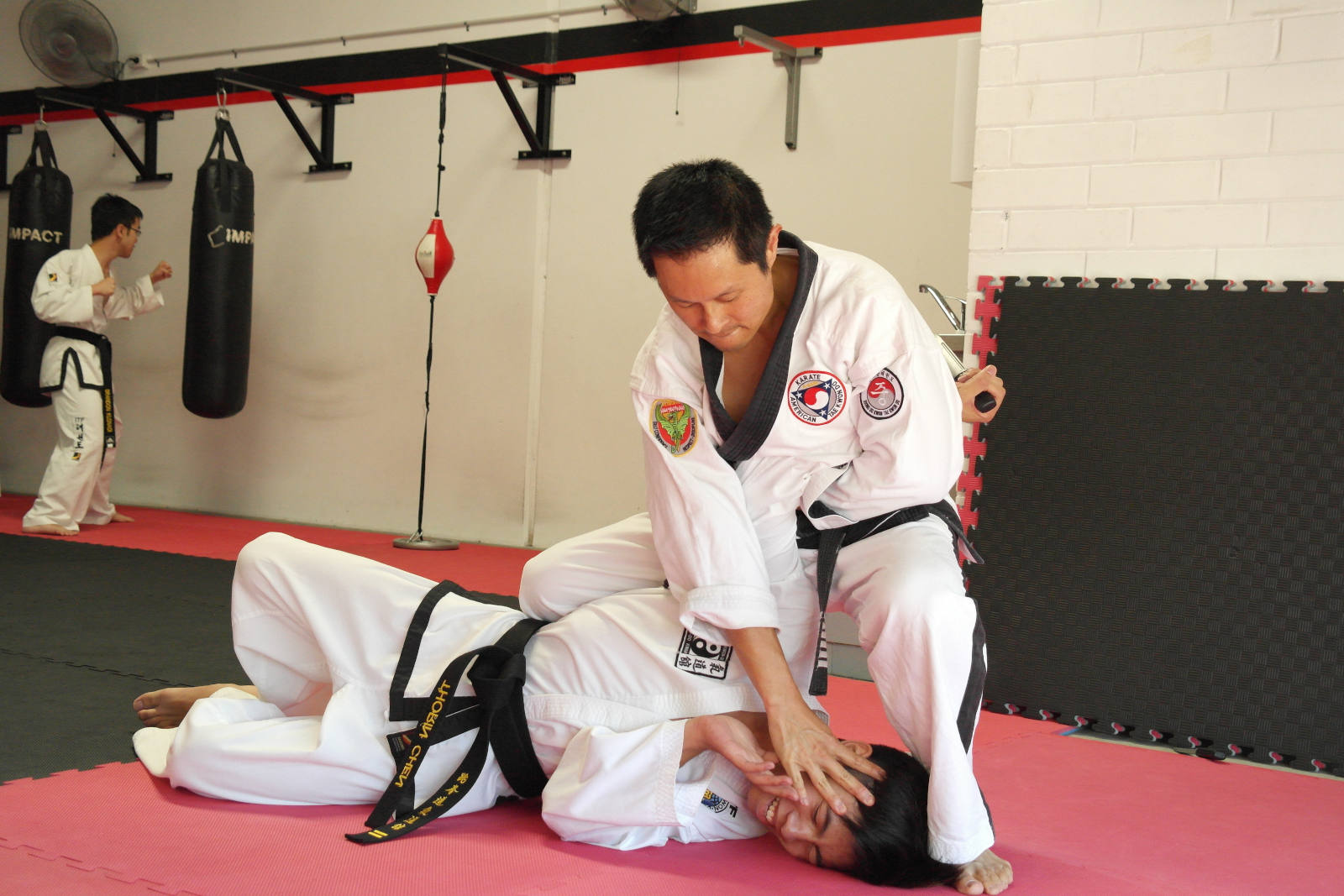
During a recent seminar with an ITF group, I used these internal Chinese principles and sent a black belt flying. Not because I was doing “Karate” or “Taekwondo,” but because I was using functional mechanics which underly both arts. In all honesty, I could have compared the movement to Taekwondo’s Sine Wave as much as I could to Karate’s Kime.
The irony is that ITF practitioners perform sine wave every day, but its prescriptive choreography might not lead to this deeper potential. As my martial art colleague Dr Sanko Lewis has previously pointed out, sine wave has real value. Some of it comes to the fore in stand‑up grappling but only if practitioners are allowed to train in that manner (see The Sine Wave Motion as a Mnemonic Device for Joint-Locks and Throws).
Free Sparring as the Acid Test
When Karateka and Taekwondoin engage in dynamic exchanges, something predictable happens: many Karateka start punching like boxers, and many Taekwondoin start kicking like kickboxers.
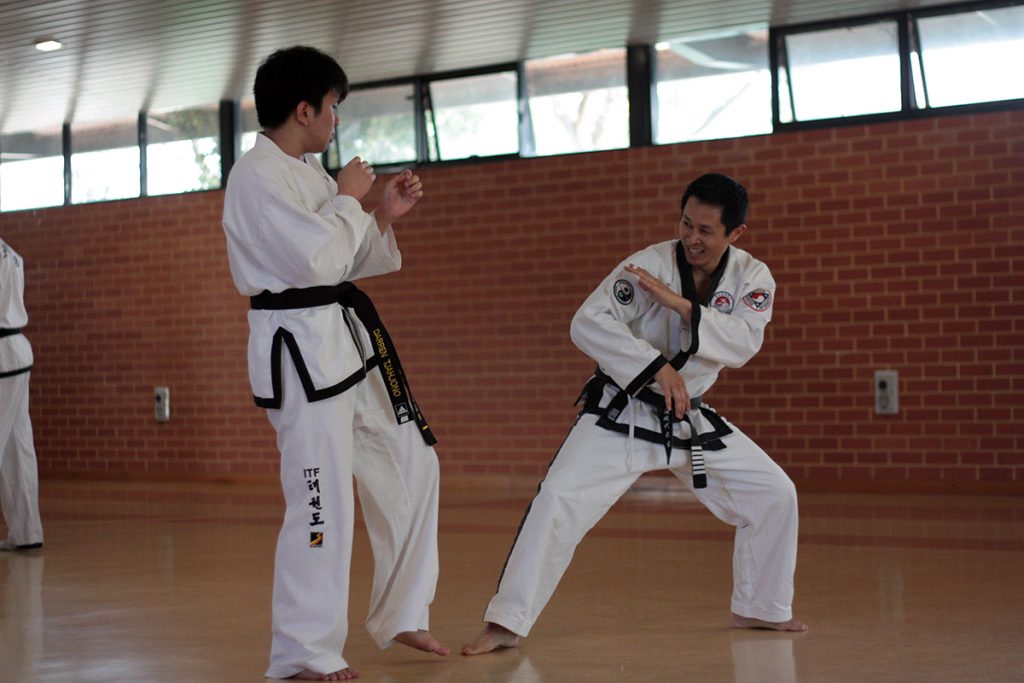
Under pressure, practitioners reach for the simplest, most accessible combative analogies available. Boxing and kickboxing offer simple mechanics, high‑yield tactics, intuitive movement, and a plethora of training resources available through YouTube.
Under duress, and when stylisation drops away, almost all practitioners simply default to functional movement.
The Bridge Between Karate and Taekwondo
Karate and Taekwondo do not need to be stylistically similar. They do not need to agree on aesthetics, pedagogy, or organisational identity.
What they do need is an understanding of where their tactical advantage lies beyond blitz logic, and functional mechanics. Style is a school’s training pedagogy. Style is their training method. Aesthetic style however is not the end goal.
When practitioners mature, many transcend stylistic signatures and move toward functional, adaptive, and personal expression. And that is where Karate and Taekwondo finally meet. Not in how they look, but in how they prepare students for growth.